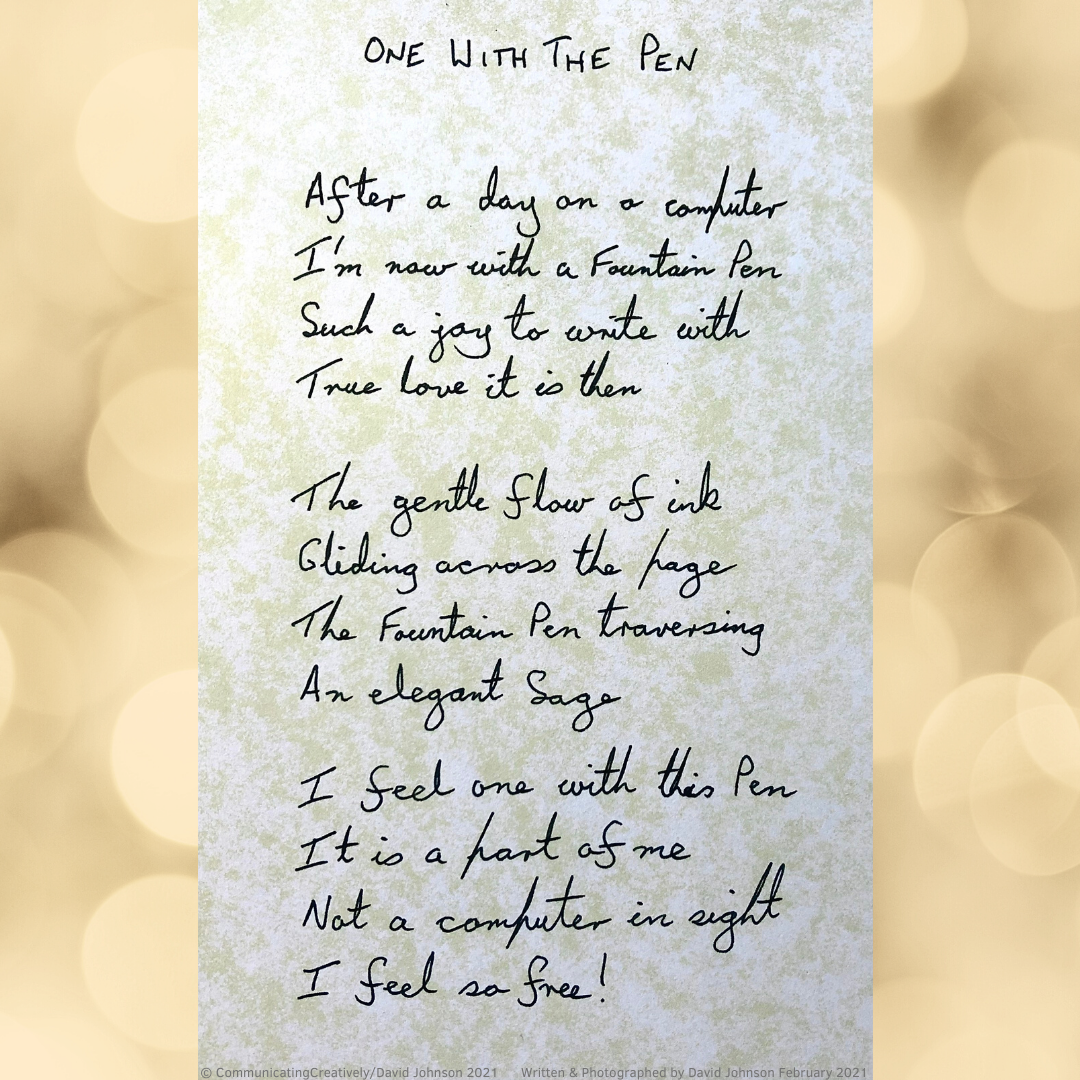
One With The Pen
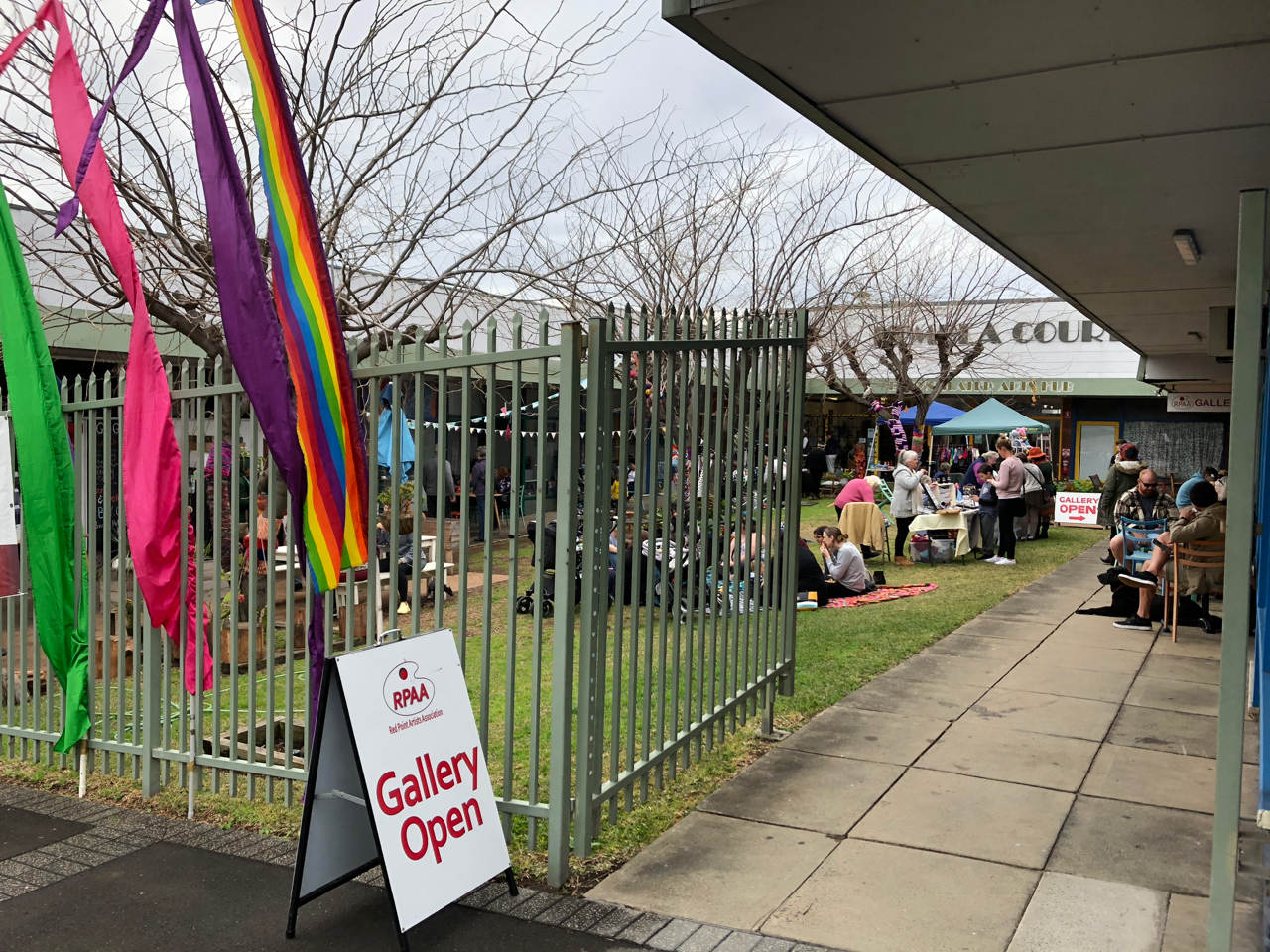
Yesterday, I joined Red Point Artists Association Inc at Port Kembla, which is situated 93 kilometres (57 miles), 1 1/2 hours drive from Sydney, near Wollongong and about 45 minutes SE of where I live.
I had visited some years ago at the invitation of a friend, Dulcie Dal Molin who is a former President of the Association and an Honorary Life Member. I have known Dulcie for may years through our involvement in Photographic Societies.
I had been wanting to become a member of RPAA for quite a few years but had too many commitments on my plate. Those commitments have now ended and my love for Sketching and Painting has increased remarkably over the last few years. The time was indeed right!
You might ask, ‘aren’t there Art Societies closer to where you live?’ ‘Why travel that distance to join this Art Community?’
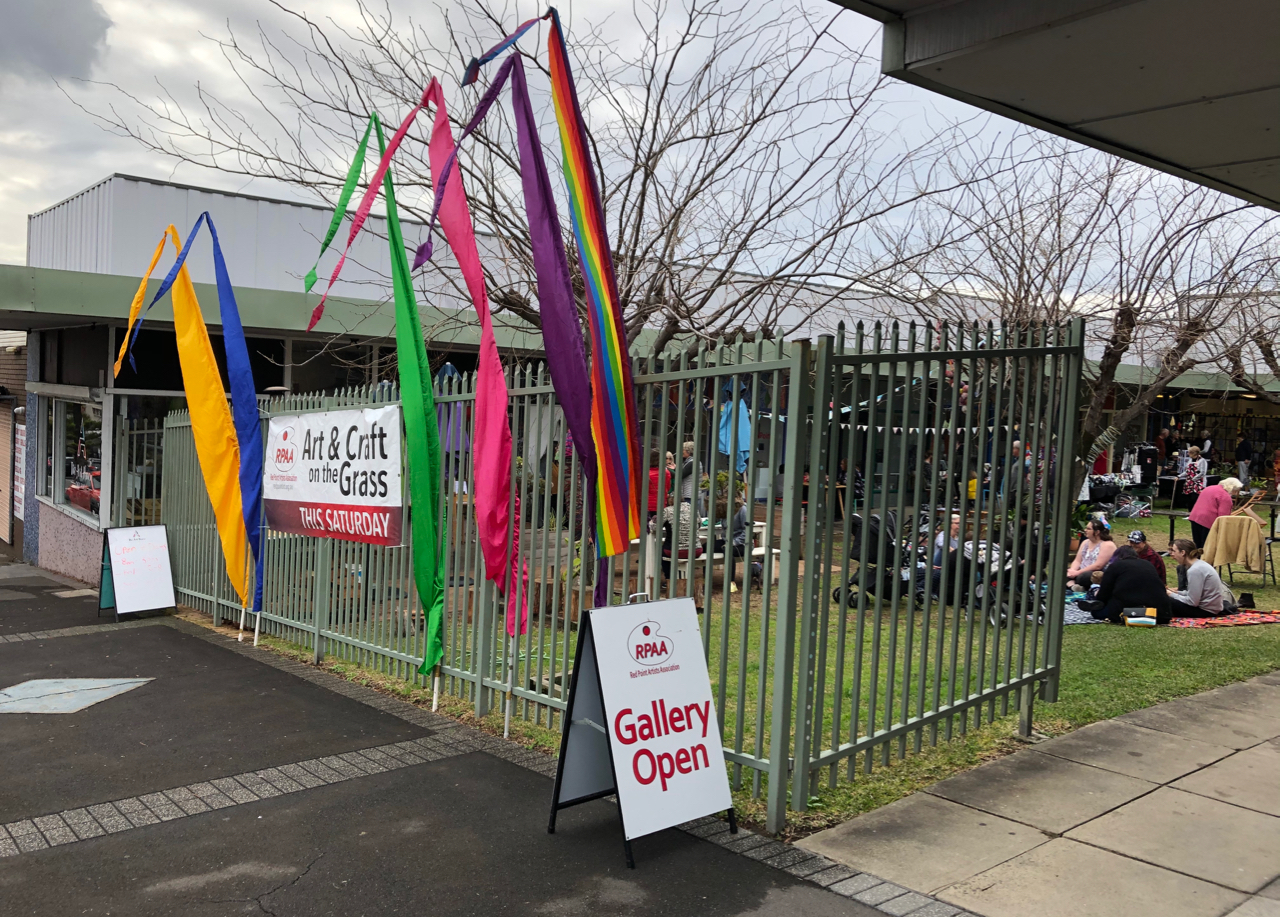
Valid questions. I have always found my visits to ‘Art On The Grass’ which are held every second Saturday of the month, for 11 months of the year, special. There is something that keeps drawing me back to this Art Community that I cannot quite put into words. Perhaps the French phrase, ‘Je ne sais quoi’ would sum it up.
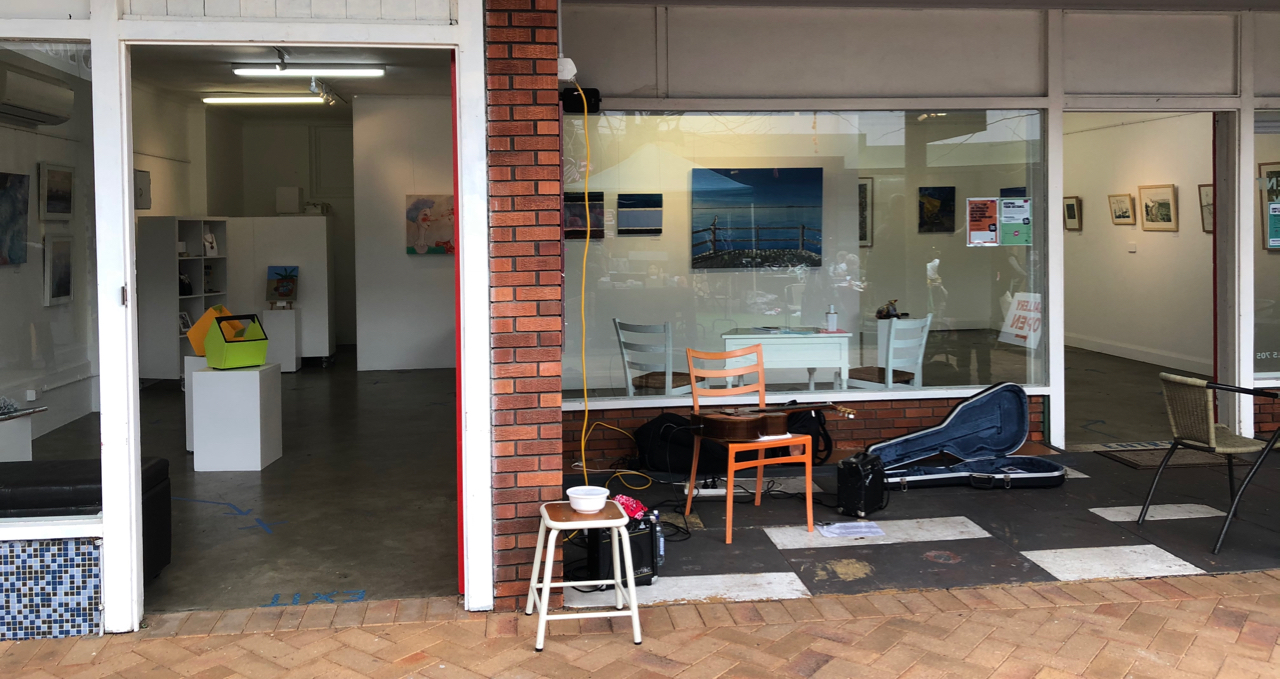
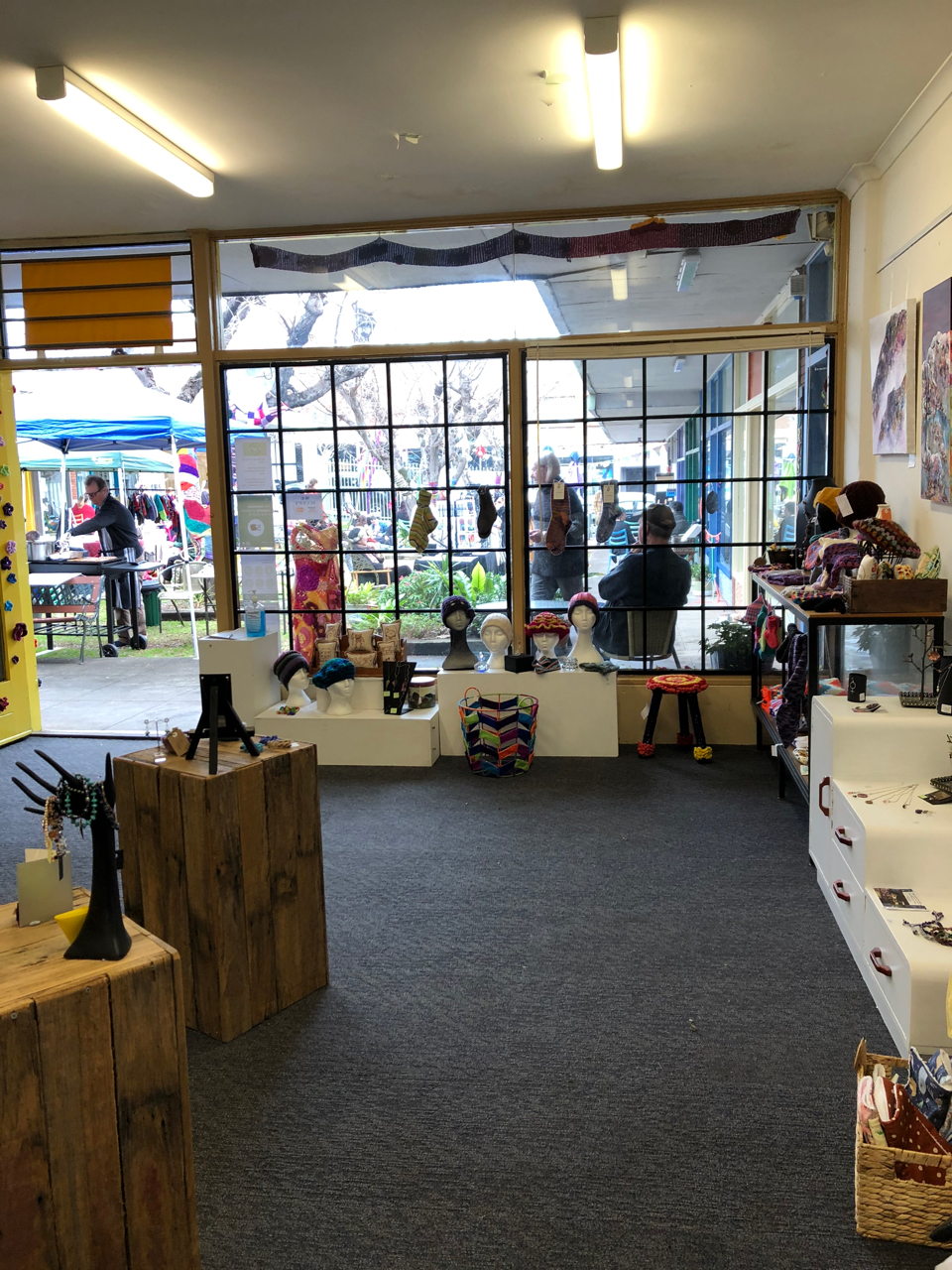
The RPAA are to be congratulated as not only have they found a ’space’ in the Main Street of Port Kembla, they have found a truly inspiring space. A grassy rectangle surrounded by a ‘horseshoe’ of studios, a gallery where the members can hold exhibitions and a cafe with outside seating that all contribute to the ‘Artsy Vibe!’
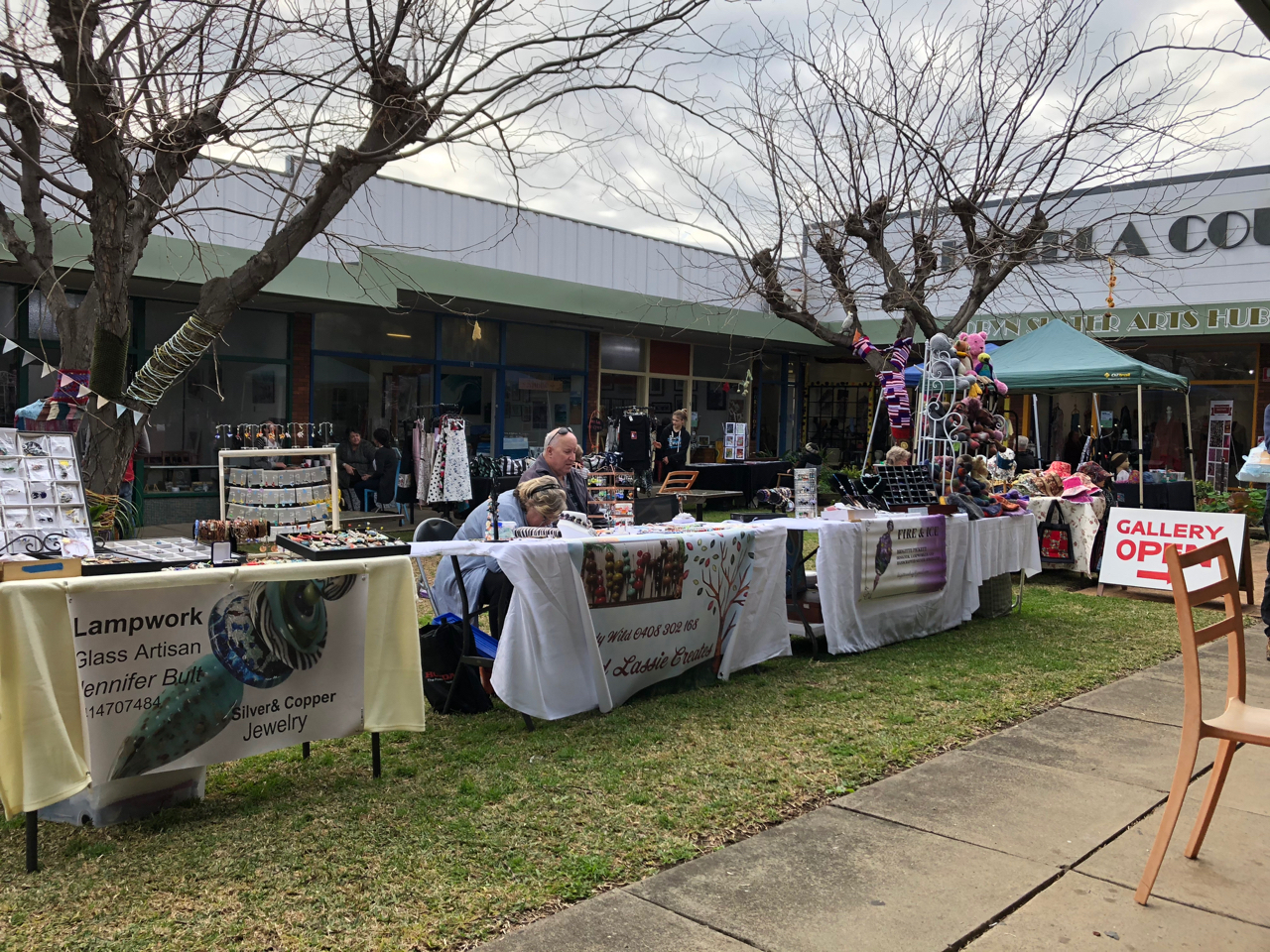
On the grass and via the studios, members can also sell their Arts and Crafts and the general public can come in and seek out that special gift for themselves or others whilst beautiful music plays in the background.
Workshops and Art classes are also held regularly.
It really presents well as a delightful Community Art Space in a relaxed environment where a variety of Arts and Crafts are practiced.<
For more information please visit the following links:

Back in 2004, I was one of 9 founding members for what became known as the Southern Highlands Photographic Society Inc. SHPS (as it has become affectionately known as) continues to be a thriving Photographic Society at East Bowral in the Southern Highlands region in NSW, Australia. Currently, they have approx. 50 members.
I moved further away in 2013 and in 2016 sadly relinquished my membership due to an inability to get to any meetings due to business and other reasons.
Last weekend, we ventured down to Bowral to see (not only the Tulip Time Festival) but SHPS’ Annual Tulip Time Photographic Exhibition which is held in the Old Bowral Town Hall, Bowral. It was finishing that day.
Put simply, the Exhibition, in terms of quality gets better and better each year. There was a stunning array of subject-matter and treatments in the 3 sections, Monochrome, Colour Print and Projected Digital. There were 120 images on display.
One of the great things about the Exhibition was that 83 of the images were mounted prints in frames. In these days of imagery, where most of what we see is on the Internet, it was so refreshing to see images hanging on a wall.
I can see SHPS being around for many, many years to come. There is such a wealth of photographic and artistic experience there and it is certainly a place where one can be inspired and educated to improve their Art and Craft.
If you are looking for a progressive Photographic Society to visit and/or join, may I wholeheartedly recommend visiting SHPS.
Please visit the website below for more information on SHPS, including their newsletter, ‘On Photography’, Galleries and Programme details.
Southern Highlands Photographic Society – Dedicated To The Art Of Photography


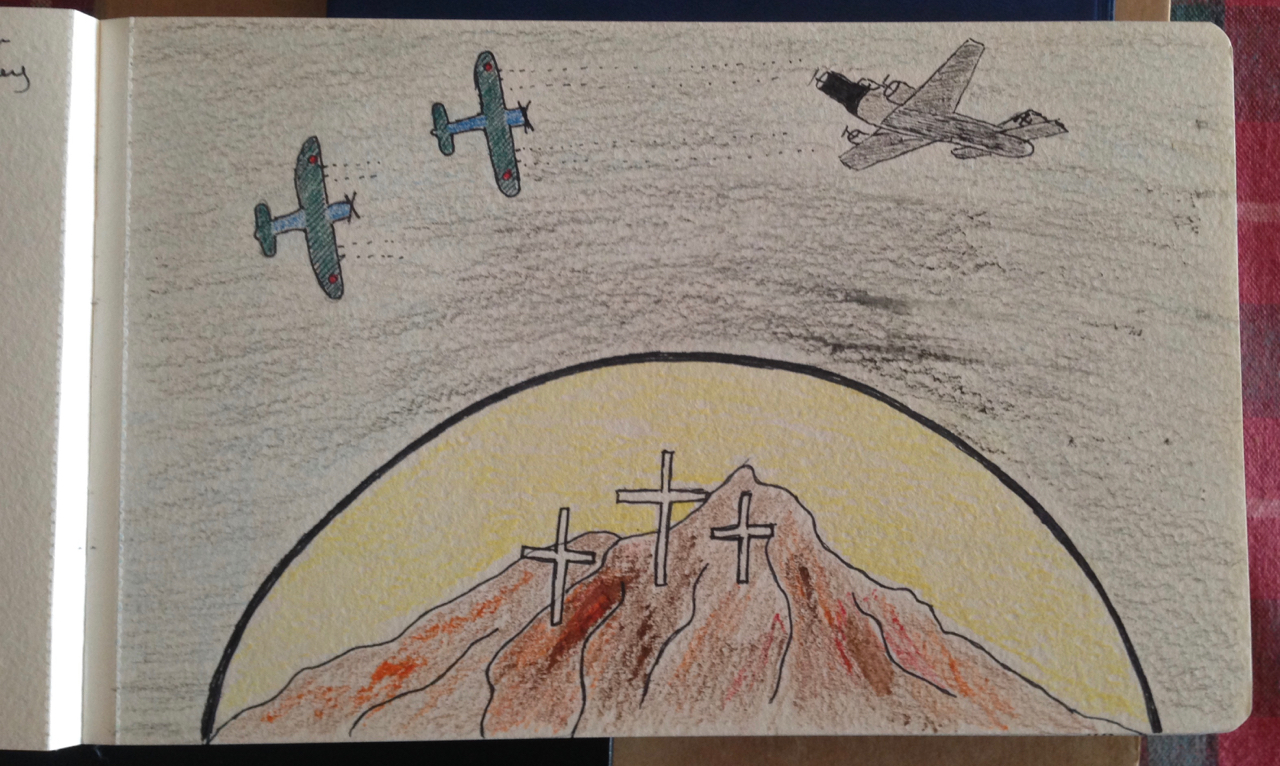
At my core I am ‘an ideas person.’ I have a lot of them and sometimes the phrase, ’shiny object syndrome’ comes to mind. Through 2003 – 2009 I was traveling 4 hours return by public transport to work in Sydney, Australia, was in two Photographic Societies, on committees and had lots of things on the go. Over the years, I have many ideas and some of them have progressed but many are still there, waiting…
I began to revisit Sketches (that were not connected with Photographic ideas) which led me to keep a related Sketching journal, which led to me completing a basic Drawing course. Up sprang another type of Journal!

Drawing led to me wondering if I could Paint? Up sprang a small Painting ‘Journal.’
I ascertained it had to be able to be good enough quality paper to be:
As I found out, there is a whole industry devoted to Journals/Journaling. Here is one of the links that were indeed very helpful to me, as I hope it will be for you.
The next decision was, ’should I buy a ready-made’ product or make my own?’
The Journal I have chosen to combine all my Artistic, Writing & Poetical ideas is an A4 Ivory paper journal.
In this Journal, to my Heart’s content I can:

As I get on in years it is going to be so much fun delving back, re-engineering ideas and seeing what thoughts and ideas I have had. When I am no longer on this Earth the Journals will be left to relatives/friends who I know will appreciate and gain enjoyment from (and who knows) may progress some of the ideas and be inspired to record their own Artistic Journey.
Do you keep a Journal of your Art, Thoughts & Ideas?
As for me, I believe I can hear my Journal calling me… Bye for now.
This blog post is inspired by a Photography Exhibition I went to today.
The Exhibition featured the images of Chris Donaldson, Frank Alvaro, Ray Finneran, Enrico Scotece and Paul Dorahy, three of whom I have known personally for many years. They specialise in Medium Format Monochrome Film Photography, and develop and print their own images.
“Solitary Moments” for them are those moments when they pre-visualise the idea and image, then spend the time photographing the scene, with the camera on a tripod. It is quite likely that they may only take 1 – 4 images in a day… Their “Solitary Moments” continue in the act of developing the negatives and seeing the finished prints appear ‘like magic’ in the developing tray.
Having experienced the above, I can certainly identify with the “Solitary Moments” they are speaking about.
Shooting Medium Format Film from a tripod-mounted camera slows you down. This helps you get a feel for the scene that you want to photograph i.e. the greater connection you have with the subject the greater chance you have of communicating what you want to say. Here the pre-visualisation continues as you imagine what the final image will look like before you take the photo.
It is later, in the Darkroom that you continue the process to achieve what you set out to communicate initially.
It reminds me of the “Solitary Moments” I have and am experiencing in my aim to become a better writer of Poetry and my fledgling steps of becoming an Oil Painter.
The processes whilst different in terms of the technology used, have some parallels.
I remember on my last trip to Joadja, a historical Shale Mining town in New South Wales, Australia. I took my camera gear and a visual art diary, pens and pencils with me.
These days I shoot digital and whilst the urge was there to do what many do with DSLR’s these days, i.e. shoot a 100 shots and then move on, I decided to sit down and ‘get a feel’ for what was in front of me, absorb the sense of history whilst studying the light and possible compositions.
The pencils came out first and I began to make some rough sketches after walking around the subject. I jotted down in a few words about how I felt and what I was seeing (which later became the poem below). The camera came out next and I again walked around the scene, pausing to take it all in before I started to shoot.
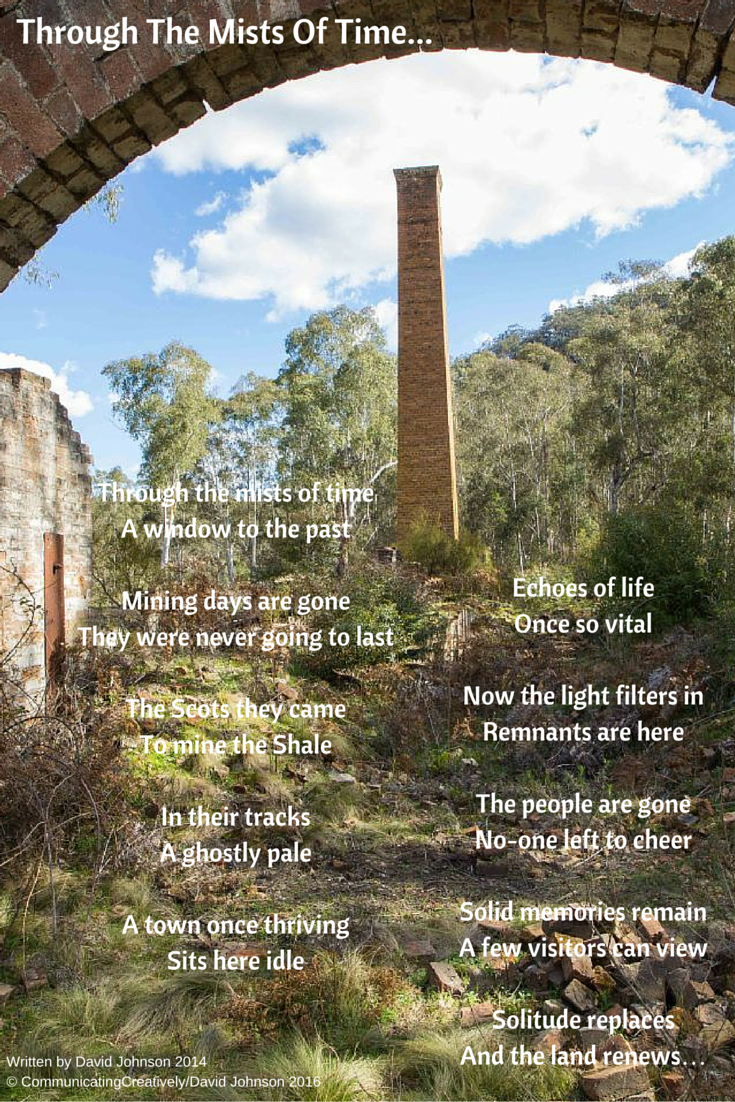
“Solitary Moments” are precious things to experience.
They also come whilst I am fleshing out an idea for a poem, when I sit at my canvas and endeavour to communicate what I feel I want to say, or when I am writing a speech.
I, like the photographers in today’s exhibition are looking forward to many more…
Written by David Johnson
1 May 2016
Exhibition details:
The Bowral Art Gallery – home of the Bowral & District Art Society & BDAS workshops. 1 Short Street, Bowral NSW Australia (02) 4861-4093
April 27 to May 10 Solitary Moments – Chris Donaldson, Ray Finneran, Frank Alvaro, Enrico Scotese and Paul Dorahy.
For more “Solitary Moments” click on the following links:
http://www.chrisdonaldson.com.au
http://www.rayfinneranphotography.com
When I first started photographing seriously (early 80’s), one of the attractions of photography was the mystery of how one would be able to achieve the image. In this instance I am talking about the technical process rather than the imaginative one that is connected with the idea or desire to portray a subject/emotion.
It was (and remains) a fascinating process. Light entered the camera and exposed the film which then was developed, then printed. There were a number of variables at each stage that could alter the way the image was captured and developed, let alone the printing process in the Darkroom.
To obtain a technically proficient image one had to perfect the techniques required to obtain the best possible image in your negative or positive image.
Fast forward to the Digital world. For some years now (due to the advances in technology, and indeed the Digital format itself), it has never been easier to obtain a ’technically proficient’ image in terms of the basic reproduction of a scene.
On the one hand, this is a positive, as it allows the photographer to concentrate more on the ‘creative’ side of things, knowing that they have the initial in-camera/process taken care of. On the minus-side it has taken away skills, enjoyment and a sense of challenge that many found to be a key part of the photographic process. Learning to choose the appropriate film, exposure, development time etc to gain a negative or positive that would help produce the desired results in printing was the goal.
There was a certain ‘mystery’ connected with the early part of the process i.e. through the processing of film and the effect of light on silver halides through exposure and development (before the darkroom printing stage) which has been lost to a certain degree. Once learnt, those techniques could be applied, but of course that took time…
I am not for one minute saying Digital is a bad thing as the Digital process has brought with it many benefits, one I have already alluded to. I shoot Digital myself.
Of course we do have the wonderful world of image manipulation programmes where we have the choice to alter images with abandon, depending on what we want to achieve. This is a great thing. With all this at our disposal though, sometimes I wonder if the technical aspects of photography have been made too easy?
Even though my passion for photography is as strong as it always has been I have (in the last few years) been slowly getting interested in painting and am currently learning Oil painting. There is certainly a ‘mystery’ there in terms of getting a ’technically proficient’ image.
I cannot just go out and purchase a brush/canvas/paint combination that will give me a technically proficient image. One has to endeavour to learn the skills, practice, make mistakes, learn some more, and repeat the process. (I am aware that I could do ‘Oil’ Painting digitally but that doesn’t hold an interest for me). Once I get better at these skills I will be able to communicate what I want to say, better and in more creative ways.
I love Art and my love for photography will continue throughout my life however my love for painting has increased with each passing year, to a point where I now aiming to allocate a certain amount of time every weekend to painting.
Much like coming up for an idea for a photograph or looking at a scene through a viewfinder, I can look at my blank canvas and proceed to paint an idea or sit outside and interpret a scene.
Ultimately though, what continues to separate individual photographers and individual painters is our imagination and the ability to convey the desired idea through creativity and technical skill.
Harry Callahan, Photographer – 1912 -1999 once said:
“The mystery isn’t in the technique, it’s in each of us…” – More Joy of Photography, Eastman Kodak – 1981
Where is the mystery?
“The mystery is in the learning and application of the technique which we then use via personal expression to creatively communicate our ideas…”
Written by David Johnson
2 April 2016
Urban sketches, etchings, watercolours, pen and ink.
A Daily Visual Journal
Practical advice for a happier, fuller, and more meaningful life
INSPIRATIONAL KWOTES, STORIES, and IMAGES
Malaysian author and storyteller
Welcome to my mind. Watch the first step, it's a doozy.
A look at life, achieving good physical and mental health and happiness
embrace the magic
Just another WordPress.com site
A place where words come alive
Learn more about an independent artist who creates a unique style of music all his own.
Discovering the joy of art
Writing, Poetry, book reviews, interviews, music reviews, contests, art
Mostly photographs with some words by this arty scientist...
Artist by choice, photographer by default, poet and author by accident.
"Rêve onirique & Bulle d'évasion"
Life is all about being curious, asking questions, and discovering your passion. And it can be fun!
By JMACTHEDREAM
Adevărata graniţă a libertăţii este gândirea. - Juliana Mallart
Listen to your inner self..it has all the answers..
For the love of pens, paper, office supplies and a beautiful place to work
Pens, inks, notebooks and other accessories
Adventures in Watercolor Painting and Sketching, Watercolour Magazine, with Charlie O'Shields
Poetry From the Heart!
The latest news on WordPress.com and the WordPress community.
Become the oil and wine in today's society.
I want to be rich. Rich in love, rich in health, rich in laughter, rich in adventure and rich in knowledge. You?
If you want to be a hero well just follow me
I dream so I write ..
Musings on poetry, language, perception, numbers, food, and anything else that slips through the cracks.
Jane Lurie Photography
An Independent Nondiscriminatory Platform With No Religious, Political, Financial, or Social Affiliations - FOUNDED 2014
Random Ravings from an Old Bloke Down Under
By Periwinkleblur
Author, Blogger, Social Media Jedi
Where observation and imagination meet nature in poetry.
Original poetry, commentary, and fiction. All copyrights reserved.


 Communicating Creatively