State Of Mind

When you go out to photograph, what ‘state of mind’ are you in?

Do you go out with an idea in mind, or do you ‘free-wheel?’

Both approaches are valid, depending on what you want to achieve. I have to say that for many years I would either pick a subject e.g. I might choose to photograph a Sunrise but have no real goal of what I wanted to capture, and so I would come home with anything, or sometimes I would just set off with my camera and ‘follow the light’ and see where it would take me.

IMG_0456Both of the above approaches produced some excellent images, some average images and of course many ‘learning experiences.’

One day at a meeting of a ‘Photo Group’ I was involved with, we were viewing a of my images when one of the members, Chris Donaldson asked me ‘what I was trying to communicate with the image?’ My answer was that “I wasn’t trying to communicate anything” I just merely  took the image for fun.

As Chris mentioned, whether or not I was intentionally trying to communicate anything, didn’t matter as I was still communicating. That day, I changed the way I viewed photography. Up to that point (even though subconscious1016358_10204241084941073_5423550170437646927_nly I knew I was communicating) I wasn’t photographing for that reason. I was just photographing because I had fun.

I still have fun to this day, but since that conversation I have approached photography in a different way, in a more thoughtful way.

Next time you go out to photograph, think about why you are going and what you want to communicate?

Written by David Johnson
November 2016

Awareness + Personal Vision + Imagination

One of the things that happened when I first started using a camera to explore the world was that I started to become more aware of what was around me. Initially, this was only on a conscious level. Gradually, over time I trained my eye to seek out things that which20130529-000021-1 others would walk straight by. This now happens on a subconscious level.

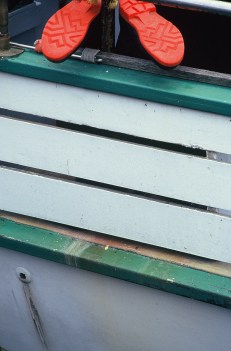
Coupled with this is my sense of humour, so that when I was walking along a pier and saw these boots, awareness & humour combined to form a memorable image for me.

This is one of the wonderful things in life. We each have our own personal vision of the world. Our personal vision is shaped by our environment, our beliefs and influences.

In picking up a camera, a paintbrush, a pencil, clay or other artistic media we can express, through our imagination that which others cannot, i.e. our personal view of this world.

Awareness, personal vision and imagination. Three important tools to communicate your message.

David Johnson
October 2016

“I am not interested in shooting new things, I am interested to see things new.” Ernst Haas

I was leafing through an old photography book and I came across the above quote by Ernst Haas. He was (and remains) a great influence on me.

There are quite literally millions of things to photograph and no photographer could rightly claim to have photographed everything there is, however we do not need to.hang-in-there

I often hear the comment, ‘there is nothing to photograph…” An amazing statement really… As I look out the window (in suburbia currently), I see many subjects and many ideas come to mind of what/how I could photograph them.

The problem isn’t the lack of subject matter. The problem is that we wander around blissfully unaware of our surroundings and we also get caught up in the world, rushing here rushing there.

STOP! Just for one moment wherever you are reading this! Look around.

Do you see a tree? Yes. Look at it as if it is not a tree, but an idea generator, branches as conduit bringing forth ideas (leaves) and photograph it accordingly…

Do you see a fence? Yes. Look at it as if it is not a fence, but a palette. A palette that has light dancing over it creating form and texture, lines and shapes.

Are you a glamour/nude photographer? View the body, not as a body but as a sculpture; view it as part of the landscape and photograph it accordingly…

Are you a flower photographer? View the flower, not as a flower but as a person with a personality…

It is not lack of subject matter, it’s a lack of ideas.

The continued challenge as a photographer is that we need to reinvent and apply new ideas to the subject matter or as Ernst Haas eloquently puts it…

“I am not interested in shooting new things – I am interested to see things new.”
Ernst Haas

David Johnson
October 2016

For more information on Ernst Haas
http://www.ernst-haas.com

Its Always Been About The Moment

It has indeed been always about the moment, whether I was shooting film or digital photography.

I remember back in 1983 when I purchased my SLR and a whole new world opened up to me, it was a liberating experience. I began to be aware and see things that had always been there yet, I had not seen. That feeling and experience continues to this day.

Back in the film days there were many ways that an image could be produced and/or manipulated. Now with the invention of Digital, we have many more ways to enhance/manipulate an image, perhaps way more than we need (or want for that matter). The ’science’ is there no matter whether we are talking Film or Digital.

I would like you to step back though, away from the film, the pixels, cameras, chemicals and paper and think about the following… If there was no moment, no spark that formed that idea in your head or no experience that drove you to pick up that camera to take that image, there would be no image.

Which takes me back to my original comment, ‘It’s always been about the moment.’

When I’m out there photographing, when I’m out there experiencing the moment i.e. the realisation of an idea, being on the hunt, interpreting the experience, recognising that moment, that has always been the thing I love the most about photography.

Back in the Darkroom or the Lightroom the process continues to build on that moment, which is necessary to bring the vision to others. That process is of course, important, for without that the photographer’s vision will not be realised.

For me though it’s that joyous moment, where I am one with my camera, an experience I can re-live in my mind at any time. The ‘finished image’ is a mere reproduction of that moment, a moment only, really truly experienced by the photographer…


Written by David Johnson
20 August 2016

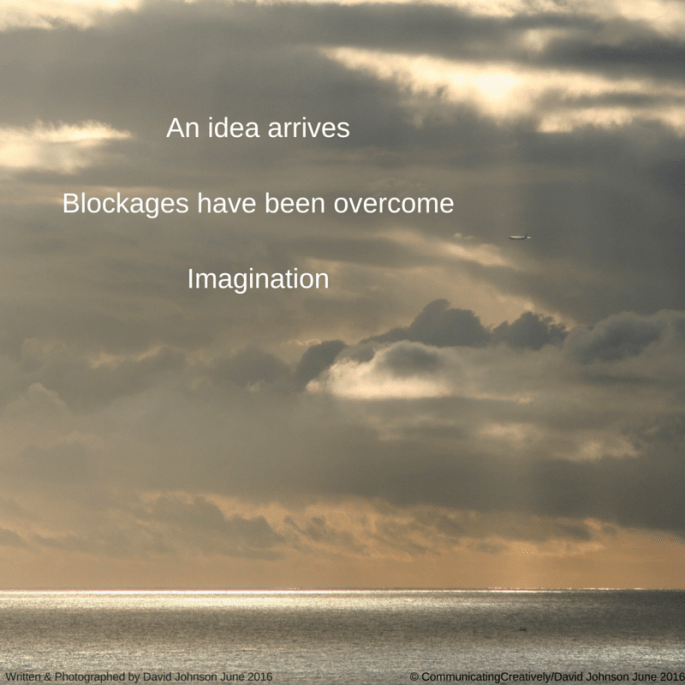
An Idea Arrives

An Idea Arrives-2

Profiling Photographers – Barry Moore

I first met Barry Moore via my membership in Toastmasters International. Barry is also a member and previously was the District 70 Toastmasters Official Photographer, and is an accomplished speaker himself. Thank you Barry for participating in this series.

Gear: Canon 5D Mkii, 50D, 400D, EOS-M – various L and non-L lenses from 10mm to 400mm. Panasonic Lumix DMC-TZ30 is my favourite portable camera for bushwalking.

  • Why did you choose Photography as your medium of communication?  

I have always enjoyed the creative process. Snapshots capture a moment in time but can tell a story as well. Landscape’s convey the beauty and isolation of a remote areas as well as the memory of the adventure. I started with an instamatic slide camera, then a TTL 35mm SLR (Hanimex Aka Practika clone). Then an OM1 for ages before the digital revolution. But it’s not the camera or lens. Often it’s that you see the shot or anticipate the shot and then capture it. There almost a sense of a “hunt” for the best shot and then the smile of satisfaction of “nailing” the composition.

  • Which Photographers have been the greatest influences on you & why? 

Ansel Adams and David Moore are great examples – they tell a story with a single image. My current favorite in Ken Duncan. Sheer beauty and the enormous patience to get his compositions right are amazing.

  • What inspires you to create the type of images that you do?                

I want a “wow” or “Ah” when people see my pictures. I love remote areas and it is great to be able to share the image and location with them.

  • What do you think makes your style unique? 

I like all style…. Deep silhouettes and shadows give great depth to an image, so I look for this.

  • Do you have any advice for an aspiring photographer? 

Practice and experiment. Attention to details is paramount. Check the background always and remove all distractions from the image if you can. Get rid of any ‘bad’ photos and try to only show the best. It’s hard to do this though.

  • What is the next big adventure for you, photographically?

I want to do some model photography or street candids. It’s an area I am lacking in.

To explore more of Barry’s creativity, click on the following inks:

http://www.pbase.com/barry_2718

http://www.modelmayhem.com/barry2718

Profiling Photographers – Fiona Brook

Welcome to the third instalment of ‘Profiling Photographers.’ I first met Fiona when judging at St.George Leagues Photographic Club. I hope you find her images and attitude to image-making as inspirational as I do. Thank you, Fiona for contributing to this series.

Gear:

Nikon D600;
Tamron 24-70mm f/2.8; Nikon 70-200mm f/2.8; Tamron 150-600mm f/5-6.3
Tamron 90mm f/2.8 macro; Lensbaby Composer; Samsung Galaxy S5

Why did you choose Photography as your medium of communication?

My father was a very keen photographer, and I guess I followed his example. Ever since I discovered that photography meant I could make and keep images, I have loved it!

Untitled1

Which Photographers have been the greatest influences on you & why?

1. My Dad – because he was the first and foremost photographer in my life. Subsequently, his sister (my aunt) was a great influence.

2. So many photographers at the St George Leagues Club Photographic Society, because that is where I rediscovered my photographic self 7 years ago.

3. Current influences are Sue Robertson, Rob Smith, Karen Scrimes, Des Crawley, John Swainston, Alister Benn, Darren Jew . . . etc, etc, too numerous to mention!

4. Then, there are the classics of course – Cartier-Bresson etc. Again, too numerous to mention.

What inspires you to create the type of images that you do?

The extraordinary power of nature is my primary inspiration. I am constantly drawn to natural phenomena and their inherent beauty. After winning the biology prize at school back in Scotland in the 1980’s, I was introduced to the films of David Attenborough. Since that time, my biggest dream has been to make wildlife films that document the extraordinary wonders of this amazing world we live in.
Maybe one day . . .

What do you think makes your style unique?

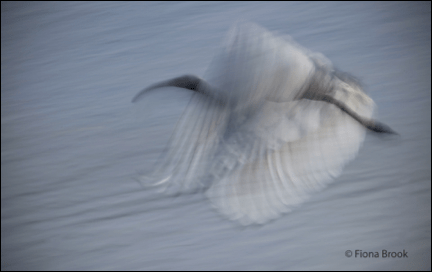
It took me ages to find my “style”, but I think in recent times I have found an impressionistic style that says what I want to say with my wildlife photography (especially birds).


Untitled2

Do you have any advice for an aspiring photographer?

I still think of myself as an aspiring photographer, so it’s difficult for me to give advice in that regard. If I were to give general advice about life, it would be – DON’T BE AFRAID! Fear is a disabling emotion 🙂

What is the next big adventure for you, photographically?

I have no idea – that’s what makes it a big adventure!

To view more of Fiona’s images, please click on the following link

http://www.fionabrookphotography.zenfolio.com

Profiling Photographers – Kenneth Hall – Gwondana Photography Pty Ltd

Welcome to the second instalment of ‘Profiling Photographers.’ I have known Kenneth Hall for many years via a few different projects/associations. Kenneth, through his background and interests, has a unique view of Australia which he imparts to those who view his photography and of course, his customers in his growing ‘Australian Photography Tours’ business. Thank you to Kenneth for agreeing to be part of this series.

Gear: Primary Canon 5D plus range of L series lenses

1. Why did you choose Photography as your medium of communication?

I have spent all my life outdoors starting as a child on the Yorkshire Moors with my father followed by many years travelling the world as a professional soldier and finally immigration to Australia.

I was also a dedicated solo bushwalker later developing and operating bushwalking clubs as well as being a member of six additional clubs.

I love nature so it was a natural step to take for me into photography.

Australia is a good place to be as a photographer and living in Macarthur gives me access to many areas of NSW.

The colours of Australia are superb, particularly dawn, sunrise and sunset. Much of my photography is undertaken at these times.

What better way to communicate with people than using colour?

Most people are visual and to use that old saying “a picture says a thousand words.”

Untitled


2. Which Photographers have been the greatest influences on you & why?

Ansel Adams, his landscapes are superb and created with the minimum of equipment.

Several from National Geographic – they are engaged in many projects around the world. One example is Paul Nicklen. They have the reputation, money and backing of an internationally known organisation. I associate their photographers with high-quality photographs with very daring and difficult to obtain compositions

Alfred Stieglitz – for his contribution to photography. It is wonderful to be known for what one did and remembered with affection.

“Adams credits three people for driving his interest in photography, Wesson and Strand and Stieglitz but it is Stieglitz that he regarded as the most important. He also regarded that first solo show in New York as the most important of his career.”

Steve McCurry – in particular for his “Afghan Girl”. Pay him a visit, his gallery says it all “http://stevemccurry.com/galleries”

3. What inspires you to create the type of images that you do?

Australia and NSW. I never become bored with nature, it is a passion.

Photography, when used in tours leads onto other things. My clients have many questions about Australia, its people, nature and our First People.

I have led a great life, none so good as my now nearing 40 years in Australia.

At one time whilst working on a four-year project on Longwall mining I was privileged to spend one day every week with a tribal elder. It was the most incredible education.

This led onto research as far back as Gondwana and the super-continent Pangea.

Our business reflects this in the choice of Gwondana, the birth of Australia as it broke away from Pangea.

I am a very proud Australian by choice.

Besides being heavily involved in landscape photography and in my book that covers everything but weddings, portraits and modelling I still do commercial photography for my clients.

This came about because of the high prices charged by professional photographers when I was optimising clients websites.

4. What do you think makes your style unique?

I don’t know that I have a unique style. If I have then I hope it is for a celebration of Australia.

Untitled2K


5. Do you have any advice for an aspiring photographer?

Get out of bed early.

Seek advice, find a mentor, learn patience and practice.

Photography is all about people, not equipment.

6. What is the next big adventure for you, photographically?

I have already started on a heritage buildings project.

In 2016, I will be visiting the UK, Canada and Alaska.

We have now taken on board the NSW Central West in the Goldfields and hooked up with Viator and a large Australia wide real estate organisation.

More of Kenneth Hall’s images can be viewed at:

Australian Photography Tours – Gwondana Photography Pty Ltd

http://www.australian-photography-tours.com

http://www.australian-sightseeing-tours.com.au

https://plus.google.com/+Australianphotographytours698/posts

https://www.facebook.com/pages/Australian-Photography-Tours/319705881489289

https://www.facebook.com/naroomaphotographytours

http://34-kenneth-hall.artistwebsites.com/


Profiling Photographers – Michael Rawle

This is the first in a new series of Photography posts that will appear regularly on this Blog. I have known Michael for approx. 25 years and we first met at Campbelltown Camera Club (now, Macarthur Photographic Society) in Sydney, Australia. A big thanks to Michael for sharing his thoughts and images!

Gear:
Currently favor and use Olympus micro 4/3 mirrorless system (E-M5 & E-M1)
I still however have (and will probably use in future)
2 x Olympus 4/3 DSLRs (E410 & E520), and
3 x Olympus OM system SLRs (OM2n, OM40, OM4)

1. Why did you choose Photography as your medium of communication?
I developed a love of movies from a very early age (my family were all film buffs) and I quickly warmed to the visual language of film in terms of both aesthetics, and in triggering an emotional response and in storytelling. In my late teen’s this translated to a love of a photography and still images and a desire to be able to capture images myself as a form of creative self-expression.

12182206_980091732048813_742680390_n

2. Which Photographers have been the greatest influences on you & why?
There are many photographers who impress me with their ability to capture wonderful images, master visual story-telling, and clearly share my sensibilities and world view. Some of these would include:
David Bailey; Max Dupain; Ansel Adams; Robert Capa; David Moore; Lewis Morley; Annie Leibovitz; Henri Cartier-Bresson; Bill Henson; Frank Hurley; Robert Mapplethorpe; William Yang; Harold Cazneaux… etc etc

3. What inspires you to create the type of images that you do?
To create strong images that are aesthetically satisfying, but also make an emotional connection to the viewer and have the ability to tell a story.

4. What do you think makes your style unique?
I don’t know if it is, however as we are all unique as people I like to think I bring my own character, personality, passions and sensibility to my creative endeavors and hopefully this is expressed in my images.

12188556_980091735382146_117350002_n

5. Do you have any advice for an aspiring photographer?
Follow your passions, be open to learning and be inspired by others, but above all stay true to yourself

6. What is the next big adventure for you, photographically?
Self-publishing books of my images; and exploring video as an extension to my love of the still image.

To look at more of Michael’s images:

Lake Pukaki Clouds 2