‘Photography Of The Age’ – Newspaper Photography In Australia

The title of this article comes from a photographic book I purchased some years ago. It’s about Newspaper photography within Australia, highlighting the 22 photographers who shot for ‘The Age’ Newspaper in Victoria. The book was published in 1993.

It is compiled by Kathleen Whelan, Photographer, who has a Masters Degree in Education and whose images are in collections in Australia, the USA and Peru.

Before it moves onto the photographers it discusses the role of the newspaper, legal and ethical constraints, processing, IMG_2808presentation, the press photographer’s role and characteristics of good newspaper photographs to name but a few of the areas covered.

Moving onto the photographers, the author delves into the minds of the photographers, gaining insights as to ther individual views as to ‘what they look for’ and ‘how their minds work’ when searching for and conveying an idea. Example images from each of the photographers are included.

Towards the rear of the book there are several case studies that cover the image, statement, camera use, design and print quality of selected photographs.

Finally, there are 26 ‘projects’ for the aspiring Photography, Art, Studio Art or Media Studies students to do.

All in all a fascinating book that I am grateful that I have on my bookshelf. I find it an inspiring read, packed with images that inspire, intrigue and amuse.

Written by David Johnson
7 September 2015

There Are No ’36 Megapixel Brushes….’

A long, long time ago (when Photography was first invented) Painters were worried that this new Art would kill them off. Why would anyone need to paint when you could just take a photo?

Of course this proved to be a fallacy. The Art of Painting grew.

Fast-forward to the 21st Century, where Digital technology has seen the most wondrous advances in photo production (the Megapixel race continues), where image manipulation software turns photos into Watercolour, Oil, Sketches and thousands of other effects are possible in a myriad of combinations.

Is there a threat to the Art of Painting now?

No.

Just like in Photography, Painting requires technical skill however (all things being equal) our individual imagination, ideas and expressive ability are what set us all apart.

In Photography it has never been easier to obtain a ‘technically competent image’ with all the technological advances that have been made. Technology however has not yet been able to replace our imagination. Photographers continue to express their ideas in new and interesting ways, based on their individuality, their environment and the influences present in their lives.

In Painting, whilst there are different grade brushes, paint and canvas options, there are no ’36 Megapixel brushes’ to give the Artist a technically-competent painting. The Painter must continue to endeavour to master the techniques and then introduce their imagination and ideas and be able to express them.

As a Photographer of 33 years and (at this point) a casual Painter of 3 years, the challenge is ahead to endeavour to master the technical aspects of painting so that I may then use my imagination to express my ideas to their fullest.

It is a challenge I am really looking forward to!

Written by David Johnson
6 September 2015
Remnants Of Life

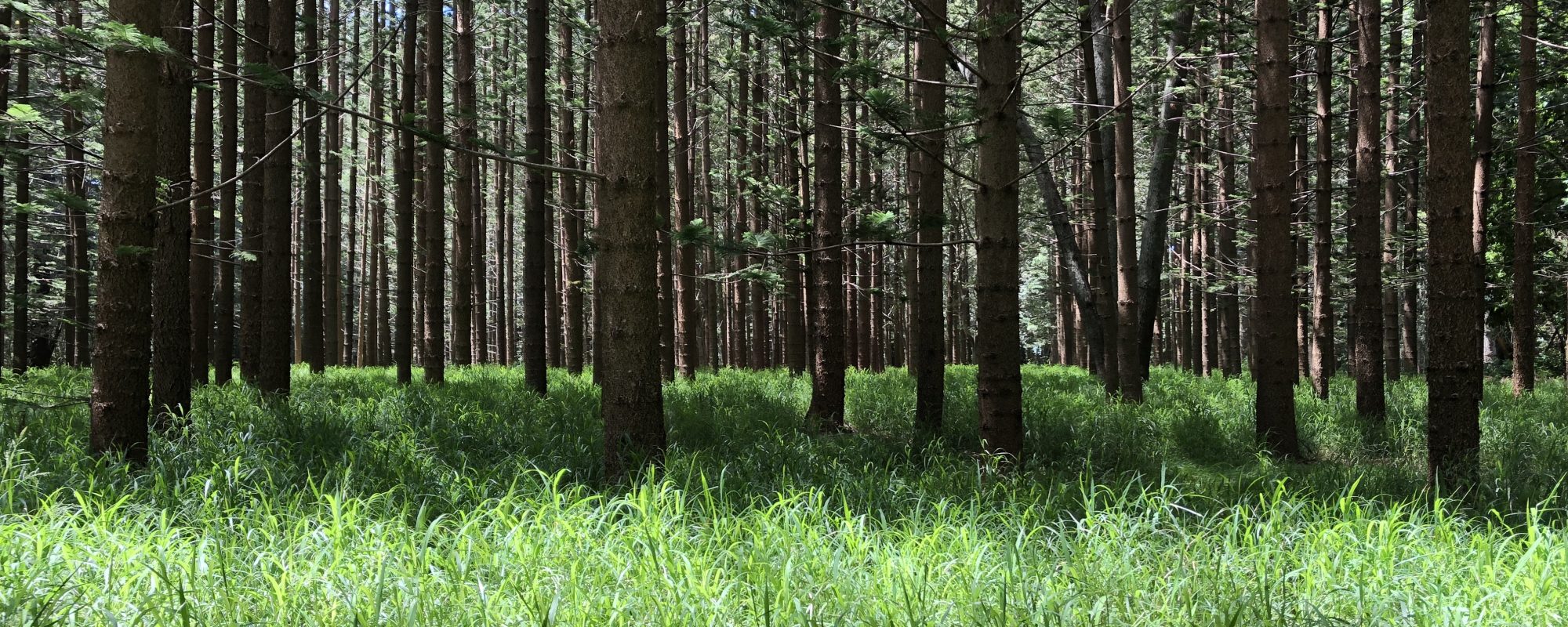
Riding along the highway
Desert clouds loom

Out from the horizon
Hear the thunder boom!

Rain, it falls
Like sheets of glass

Tearing across
Long dried out grass

Ghostly calls are heard
Long borne in strife

Clamouring for attention
Mere remnants of life

Rising from the Earth
Those next in line

Continue their journey
An infinite paradigm…


Written by David Johnson

© CommunicatingCreatively/David Johnson 2015

The Journey Has Begun…

As long as I can remember, I’ve enjoyed looking at Art, particularly Paintings.

Many hours have been spent visiting Art Galleries, viewing books, magazines on Art and Art images on the Internet. I love investigating the different Styles and Movements that have (& are being created).

Prior to 2010 I hadn’t really given much thought to actually picking up a brush, except that I thought I might ‘have a go’ when I retired. ‘Out of the blue’ I decided to take a 6 week drawing course at a small Art Gallery about half an hour from home.

I learnt there that I (apparently) draw by line instead of tone and had a wonderful time drawing on A5 to A2 paper using Graphite pencil and Charcoal on subjects such as Architecture, Head & Shoulder Life Portraits and Nature.

It was after the Drawing course that I started to get interested in actually trying my hand at painting. I started playing around with Watercolour. At this point I did not even realise that Watercolour is considered to be the hardest medium. From there I ventured onto Acrylic and enjoyed playing with that, though after talking to the owner of a local Art store I decided to try Oil painting.

I am enjoying Oil painting immensely! I have not had any lessons at this point in time, just tips from my Brother, my Mother-In-Law and a couple of friends. Other influences are the copious amounts of Art books I borrow from the local library, magazines and You Tube videos.

At some point I do intend having some official lessons but for the moment I am enjoying exploring, experimenting and having fun. Sometimes I try to paint from a reference photo and other times from my imagination. I think the latter is my favourite.

Oil painting has become another ‘escape’ for me, much like the other forms of communication found in this blog. It allows me to leave ‘reality’ and it refreshes me.

Sometimes, I can vividly see the scenes that I would like to create via painting, but my technical skill is a fair way behind where it needs to be to be able to replicate what I see in my mind. In time I hope it catches up! In the meantime, I’ll enjoy the place I am at and look forward to the journey of self-discovery and learning.

Here are a few examples of of my paintings thus far…

Written by David Johnson
30 August 2015

20150620-IMG_2356-1 20150620-IMG_2347-1 20150620-IMG_2346-1 20150620-IMG_2344-1

Two More Lessons Learned or ‘How I Managed To Get Through Speech Project #4 Alive!?’

Over the course of my time as a member of Toastmasters International, I have learnt many, many things to help me communicate better in my speeches, presentations, evaluations and endeavour to become a better leader. I still have a lot learn as well.

On joining Toastmasters you receive two Manuals, the Competent Communicator manual (10 speeches) and the Competent Leader manual (10 Leadership Projects).

One of the earlier prominent lessons I learnt was in my fourth speech of the ‘Competent Communicator’ Manual. Speech Project #4 was “How To Say It?

I recall writing a speech called ‘Art, An Anaesthetic To The Problems Of The World.’ Hmmm, yes, it still strikes me as a dry title and speech for that matter!

It was two pages long, in 10 point font and I recall vividly that I memorised the whole speech and forty times I was able to ‘recall it by wrote…’

Come the Toastmasters Club meeting, I was very nervous.

All went well, for the first four lines…then came the fifth line and ‘I was nowhere…’ You guessed it, due to nerves I had forgotten what the fifth line was. Silence, awkward silence followed…

I had notes with me but nerves, being what they are took control and I endeavoured to just read the notes but that was not working and I felt awkward again. Then a thought occurred to me…’you know the speech, just tell them’ and I did.

I was able to finish the speech, not with the words I had written, but words that ‘just came out…’

Two lessons were learnt in this speech project.

  1. Never try to memorise the full speech. Know your Beginning & Ending well and know what you want to say in the middle without memorising it. (This was the kind advice from a DTM {Distinguished Toastmaster}, the highest level achievable in Toastmasters International).
  2. We write differently to the way we speak.

The above lessons have served me well, as in speeches since I have written the speech out but because I know what I want to say, I deliver it without having to go ‘word-for-word’ and this has worked well for me.

In my next article on Public Speaking, I’ll be talking about how ‘My Imaginary Umbilical Cord Was Cut…’

Written by David Johnson
23 August 2015

Stories…

They ring in the air
With the passing breeze

Stories are told
With consumate ease

Casting the mind back
To days before

Memories fast
Come to the fore

They gently persuade
And settle your mood

Bringing you back
To the present

Leaving your mind
Effervescent!

Written by David Johnson
© CommunicatingCreatively/David Johnson 2015

Inspirations… Photography

Whenever we have an interest, be it in Art, Sport, Work or in another area of Life, there are people that will inspire you.

Over time I will be highlighting the men, women and groups that have (or still do) inspire me.

I begin with one of my favourite photographers, Margaret Bourke-White: (1904 – 1971)

Margaret Bourke-White was a pioneer in many ways and her specialties included Photojournalism, Social Documentation, Architectural, Industrial and War photography, working in predominantly Black & White. She was one of LIFE Magazine’s most prolific photographers.

20150820-IMG_2573-1Margaret Bourke-White had a fascinating life full of challenges and adventures. I remain captivated by her imagery and her boldness in overcoming both work-related and personal challenges throughout her prolific photo-taking period from 1920’s through the 1950’s. She was indeed a pioneer.

In photographing in a Steel plant she used heavy equipment (that today would seem antiquated) and experimented with lenses, films, Magnesium flares and her imagination to obtain dramatic Industrial images.

Margaret Bourke-White also worked with Writer, Erskine Caldwell on the ‘You Have Seen Their Faces’ Sharecropper farmers that affected 10,000,000 Southern Family lives in the United States in 1936. The project was approached in a compassionate manner. The images are powerful and depict the farmers’ harsh way of life…

She was a pioneer of the ‘photo essay’ and photographed many of the leaders of her time, including Gandhi, Pope Pius XII, Stalin, Roosevelt, Churchill.

I look at her images and can see a great sense of personal involvement from her in them. Immersing herself into her subjects, she was able to bring out graphic emotion and the beauty of light, shape and form. I have two books i.e. her autobiography, “Portrait of Myself” and the book pictured above.

A true inspiration!

Written by David Johnson
20 August 2015

Recommended reading: