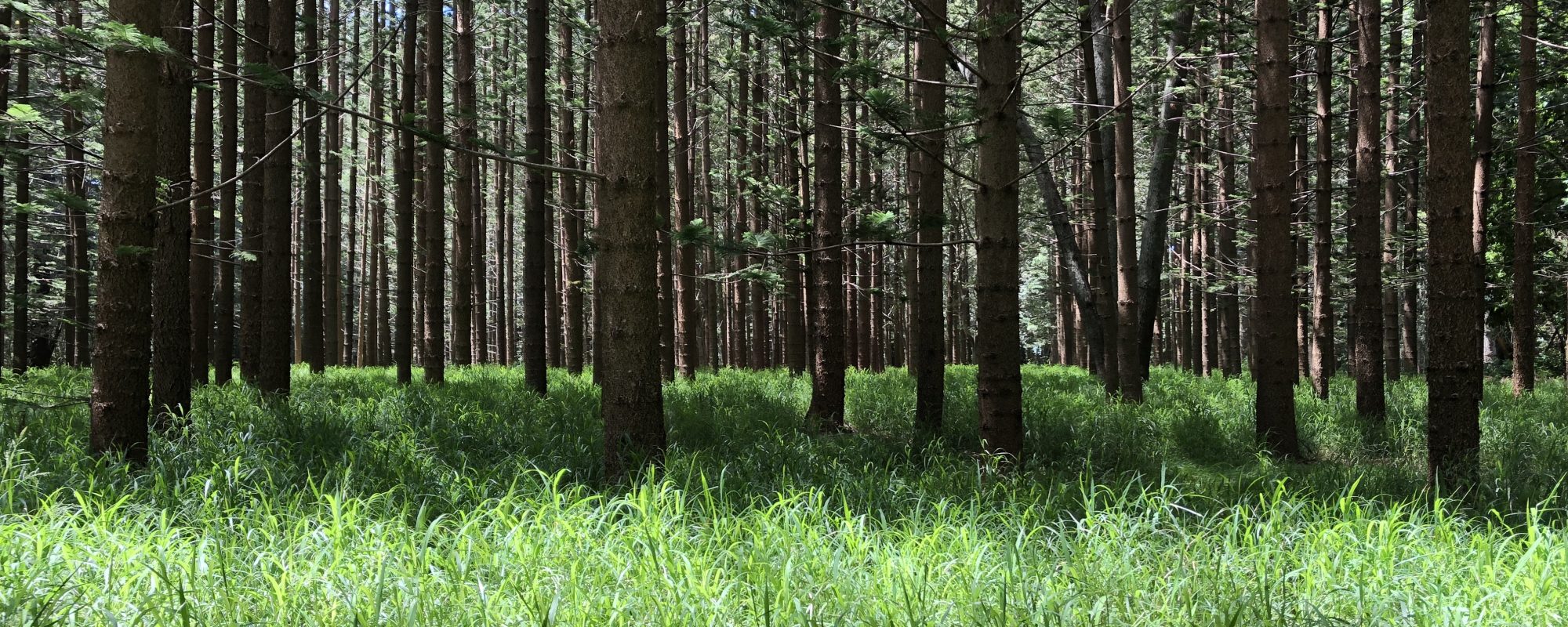
John Alexander Dersham – Profiling Photographers

Welcome to Profiling Photographers #4. I ‘met’ John through Facebook and he introduced me to the inspired vision of his photography. John has a richness and depth in his photography that I’m sure you will all enjoy. Thank you to John for being part of this series.

Gear:

Canon 5D with L-type lenses for digital.

Large format film cameras for film-Toyo 8x10M and Wista and Linhof 4×5 cameras-Schneider, Fuji and Nikkor lens from 90-450mm.

1. Why did you choose Photography as your medium of communication?

I started at age 9 using my dad’s 1930 Brownie. I loved capturing fleeting moments and liked composing images for artistic values. I have stayed with the art form all of my life. I am now 64 years old.
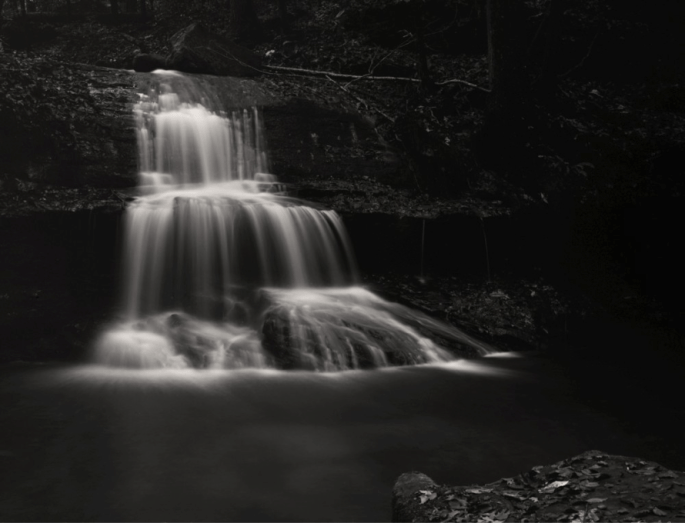
Untitledjd1

2. Which Photographers have been the greatest influences on you & why?

Andy Tau, former member of Ansel Adams F64 club and former President of the School of Photojournalism at the University of Missouri. I joined the Mid-Missouri Camera Club in 1966 of which he was a member. He taught me the Ansel Adams methods along with Roger Berg and Milt Shanklin who were both in the club. They provided a very great amount of help to me at a very young age in areas of composition and technical skill.

Ansel Adams, Winston Link,Dorothea Lange and Edward Weston all played a role in inspiring me and serving as visual guides helping me learn to see my personal visions.

3. What inspires you to create the type of images that you do?

I like images that are both beautiful but also have a story associated with the images. Sometimes the story is about the impact of the image created by the lighting or weather conditions like rain, snow, fog.

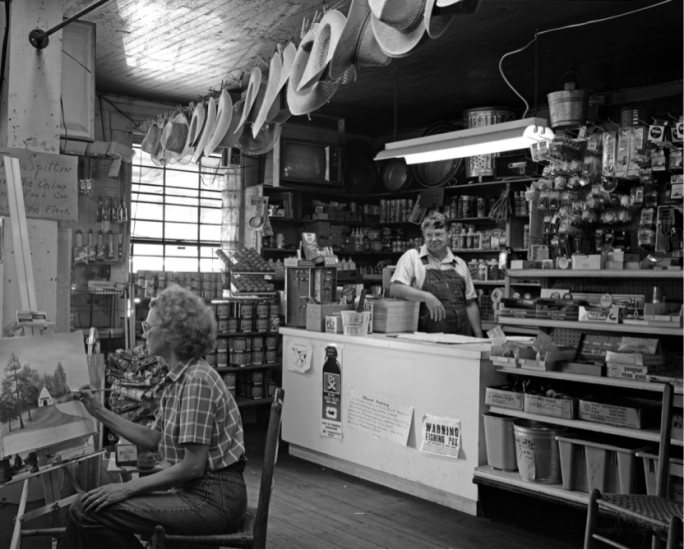
I also love to shoot images of people in settings that have a story behind them, like their place of business, such as; a store, a factory or a craft.

4. What do you think makes your style unique?

I think my view of the world is a bit different and it is reflected in my work compositionally but also in the way I interpret light and compositional elements. I tend to shoot wide in order to tell a story with more content.
 

Untitledjd2

5. Do you have any advice for an aspiring photographer?

I suggest having a passion for a subject that is all yours. When people view your work it should not be a repeat of everyone else’s view. Waterfalls and sunsets are wonderful and fun to shoot but they will not make a photographer famous nor will they deliver any suggestion of being unique. You have to create a style both in subject matter and compositional values that viewers can immediately tell it is your work.

6. What is the next big adventure for you, photographically?

I am working on a couple of books and brochures for the travel industry related to promoting the scenic beauty of the Southeast United States.

I am also working toward a B&W book called “Where the Road Ends”. These images are mostly large format B&W images of views of long-term business locations that have been in families for generations or have already closed but the their story still can be told in the images of their slow decay along the roadsides of America.

www.johndersham.com

John Alexander Dersham Classic Fine Art B&W on Facebook
https://www.facebook.com/John-Alexander-Dersham-Classic-Fine-Art-Black-and-White-Photography-313045360458/?fref=ts



Follow my blog with Bloglovin

Profiling Photographers – Fiona Brook

Welcome to the third instalment of ‘Profiling Photographers.’ I first met Fiona when judging at St.George Leagues Photographic Club. I hope you find her images and attitude to image-making as inspirational as I do. Thank you, Fiona for contributing to this series.

Gear:

Nikon D600;
Tamron 24-70mm f/2.8; Nikon 70-200mm f/2.8; Tamron 150-600mm f/5-6.3
Tamron 90mm f/2.8 macro; Lensbaby Composer; Samsung Galaxy S5

Why did you choose Photography as your medium of communication?

My father was a very keen photographer, and I guess I followed his example. Ever since I discovered that photography meant I could make and keep images, I have loved it!

Untitled1

Which Photographers have been the greatest influences on you & why?

1. My Dad – because he was the first and foremost photographer in my life. Subsequently, his sister (my aunt) was a great influence.

2. So many photographers at the St George Leagues Club Photographic Society, because that is where I rediscovered my photographic self 7 years ago.

3. Current influences are Sue Robertson, Rob Smith, Karen Scrimes, Des Crawley, John Swainston, Alister Benn, Darren Jew . . . etc, etc, too numerous to mention!

4. Then, there are the classics of course – Cartier-Bresson etc. Again, too numerous to mention.

What inspires you to create the type of images that you do?

The extraordinary power of nature is my primary inspiration. I am constantly drawn to natural phenomena and their inherent beauty. After winning the biology prize at school back in Scotland in the 1980’s, I was introduced to the films of David Attenborough. Since that time, my biggest dream has been to make wildlife films that document the extraordinary wonders of this amazing world we live in.
Maybe one day . . .

What do you think makes your style unique?

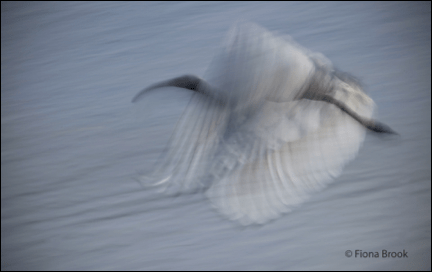
It took me ages to find my “style”, but I think in recent times I have found an impressionistic style that says what I want to say with my wildlife photography (especially birds).


Untitled2

Do you have any advice for an aspiring photographer?

I still think of myself as an aspiring photographer, so it’s difficult for me to give advice in that regard. If I were to give general advice about life, it would be – DON’T BE AFRAID! Fear is a disabling emotion 🙂

What is the next big adventure for you, photographically?

I have no idea – that’s what makes it a big adventure!

To view more of Fiona’s images, please click on the following link

http://www.fionabrookphotography.zenfolio.com

Profiling Photographers – Kenneth Hall – Gwondana Photography Pty Ltd

Welcome to the second instalment of ‘Profiling Photographers.’ I have known Kenneth Hall for many years via a few different projects/associations. Kenneth, through his background and interests, has a unique view of Australia which he imparts to those who view his photography and of course, his customers in his growing ‘Australian Photography Tours’ business. Thank you to Kenneth for agreeing to be part of this series.

Gear: Primary Canon 5D plus range of L series lenses

1. Why did you choose Photography as your medium of communication?

I have spent all my life outdoors starting as a child on the Yorkshire Moors with my father followed by many years travelling the world as a professional soldier and finally immigration to Australia.

I was also a dedicated solo bushwalker later developing and operating bushwalking clubs as well as being a member of six additional clubs.

I love nature so it was a natural step to take for me into photography.

Australia is a good place to be as a photographer and living in Macarthur gives me access to many areas of NSW.

The colours of Australia are superb, particularly dawn, sunrise and sunset. Much of my photography is undertaken at these times.

What better way to communicate with people than using colour?

Most people are visual and to use that old saying “a picture says a thousand words.”

Untitled


2. Which Photographers have been the greatest influences on you & why?

Ansel Adams, his landscapes are superb and created with the minimum of equipment.

Several from National Geographic – they are engaged in many projects around the world. One example is Paul Nicklen. They have the reputation, money and backing of an internationally known organisation. I associate their photographers with high-quality photographs with very daring and difficult to obtain compositions

Alfred Stieglitz – for his contribution to photography. It is wonderful to be known for what one did and remembered with affection.

“Adams credits three people for driving his interest in photography, Wesson and Strand and Stieglitz but it is Stieglitz that he regarded as the most important. He also regarded that first solo show in New York as the most important of his career.”

Steve McCurry – in particular for his “Afghan Girl”. Pay him a visit, his gallery says it all “http://stevemccurry.com/galleries”

3. What inspires you to create the type of images that you do?

Australia and NSW. I never become bored with nature, it is a passion.

Photography, when used in tours leads onto other things. My clients have many questions about Australia, its people, nature and our First People.

I have led a great life, none so good as my now nearing 40 years in Australia.

At one time whilst working on a four-year project on Longwall mining I was privileged to spend one day every week with a tribal elder. It was the most incredible education.

This led onto research as far back as Gondwana and the super-continent Pangea.

Our business reflects this in the choice of Gwondana, the birth of Australia as it broke away from Pangea.

I am a very proud Australian by choice.

Besides being heavily involved in landscape photography and in my book that covers everything but weddings, portraits and modelling I still do commercial photography for my clients.

This came about because of the high prices charged by professional photographers when I was optimising clients websites.

4. What do you think makes your style unique?

I don’t know that I have a unique style. If I have then I hope it is for a celebration of Australia.

Untitled2K


5. Do you have any advice for an aspiring photographer?

Get out of bed early.

Seek advice, find a mentor, learn patience and practice.

Photography is all about people, not equipment.

6. What is the next big adventure for you, photographically?

I have already started on a heritage buildings project.

In 2016, I will be visiting the UK, Canada and Alaska.

We have now taken on board the NSW Central West in the Goldfields and hooked up with Viator and a large Australia wide real estate organisation.

More of Kenneth Hall’s images can be viewed at:

Australian Photography Tours – Gwondana Photography Pty Ltd

http://www.australian-photography-tours.com

http://www.australian-sightseeing-tours.com.au

https://plus.google.com/+Australianphotographytours698/posts

https://www.facebook.com/pages/Australian-Photography-Tours/319705881489289

https://www.facebook.com/naroomaphotographytours

http://34-kenneth-hall.artistwebsites.com/


Profiling Photographers – Michael Rawle

This is the first in a new series of Photography posts that will appear regularly on this Blog. I have known Michael for approx. 25 years and we first met at Campbelltown Camera Club (now, Macarthur Photographic Society) in Sydney, Australia. A big thanks to Michael for sharing his thoughts and images!

Gear:
Currently favor and use Olympus micro 4/3 mirrorless system (E-M5 & E-M1)
I still however have (and will probably use in future)
2 x Olympus 4/3 DSLRs (E410 & E520), and
3 x Olympus OM system SLRs (OM2n, OM40, OM4)

1. Why did you choose Photography as your medium of communication?
I developed a love of movies from a very early age (my family were all film buffs) and I quickly warmed to the visual language of film in terms of both aesthetics, and in triggering an emotional response and in storytelling. In my late teen’s this translated to a love of a photography and still images and a desire to be able to capture images myself as a form of creative self-expression.

12182206_980091732048813_742680390_n

2. Which Photographers have been the greatest influences on you & why?
There are many photographers who impress me with their ability to capture wonderful images, master visual story-telling, and clearly share my sensibilities and world view. Some of these would include:
David Bailey; Max Dupain; Ansel Adams; Robert Capa; David Moore; Lewis Morley; Annie Leibovitz; Henri Cartier-Bresson; Bill Henson; Frank Hurley; Robert Mapplethorpe; William Yang; Harold Cazneaux… etc etc

3. What inspires you to create the type of images that you do?
To create strong images that are aesthetically satisfying, but also make an emotional connection to the viewer and have the ability to tell a story.

4. What do you think makes your style unique?
I don’t know if it is, however as we are all unique as people I like to think I bring my own character, personality, passions and sensibility to my creative endeavors and hopefully this is expressed in my images.

12188556_980091735382146_117350002_n

5. Do you have any advice for an aspiring photographer?
Follow your passions, be open to learning and be inspired by others, but above all stay true to yourself

6. What is the next big adventure for you, photographically?
Self-publishing books of my images; and exploring video as an extension to my love of the still image.

To look at more of Michael’s images:

Carriageworks

‘Morning Pages’

Morning Pages
Are a treat
A chance for you
To press ‘delete’

Stream of consciousness
Is the goal
Writing from within
The deepest of Souls

Clearing the mind
Is what it achieves
Wearing your Heart
On it’s sleeve

At the conclusion
Pen and paper retired
Your brain is now
So unwired

Free to create
Without the clutter
Creative thoughts now
You can utter

Written by David Johnson
12 September 2015

© CommunicatingCreatively/David Johnson 2015

With thanks to Julia Cameron for your inspiration!
Find out more at: http://juliacameronlive.com/basic-tools/morning-pages/

Inspirations – Photography: Duane Michals b.1932

Duane Michal’s Art has, throughout his photographic life been met with controversy as he has a non-conformist view of photography.

“The Joy Of Photography Volume 2” indicates that his chief inspiration was Surrealism. The Surrealistic Painters, he said, ‘always contradict people’s assumptions, whilst photographers never do.’

Duane Michals often attempted to ‘play with people’s minds’ in his Art rather than ‘record’ a scene, whether it be shooting standalone images or shooting a series of images on a theme.

He said the magic was ‘seeing people in different ways.’

He preferred Environmental Portraiture and worked in Black & White with existing light and compared his photography with the writing of fiction. He often placed a familiar subject (or object) in unfamiliar territory or in an unfamiliar way or context.

One of my favourite photographic quotes is attributed to him….

“Trust that little voice in your head that says, ‘wouldn’t it be interesting if….’ and then do it.” – Duane Michals.

I first came across the above quote in 1982 (when my own serious photographic journey began).

Duane Michals inspires me in ‘how I think about photography.’ As I am shooting that quote springs to mind every time and I encourage every photographer to do the same.

I’ve included the following link so that you can view some of his images.

http://duanemichals.tumblr.com


‘Photography Of The Age’ – Newspaper Photography In Australia

The title of this article comes from a photographic book I purchased some years ago. It’s about Newspaper photography within Australia, highlighting the 22 photographers who shot for ‘The Age’ Newspaper in Victoria. The book was published in 1993.

It is compiled by Kathleen Whelan, Photographer, who has a Masters Degree in Education and whose images are in collections in Australia, the USA and Peru.

Before it moves onto the photographers it discusses the role of the newspaper, legal and ethical constraints, processing, IMG_2808presentation, the press photographer’s role and characteristics of good newspaper photographs to name but a few of the areas covered.

Moving onto the photographers, the author delves into the minds of the photographers, gaining insights as to ther individual views as to ‘what they look for’ and ‘how their minds work’ when searching for and conveying an idea. Example images from each of the photographers are included.

Towards the rear of the book there are several case studies that cover the image, statement, camera use, design and print quality of selected photographs.

Finally, there are 26 ‘projects’ for the aspiring Photography, Art, Studio Art or Media Studies students to do.

All in all a fascinating book that I am grateful that I have on my bookshelf. I find it an inspiring read, packed with images that inspire, intrigue and amuse.

Written by David Johnson
7 September 2015

There Are No ’36 Megapixel Brushes….’

A long, long time ago (when Photography was first invented) Painters were worried that this new Art would kill them off. Why would anyone need to paint when you could just take a photo?

Of course this proved to be a fallacy. The Art of Painting grew.

Fast-forward to the 21st Century, where Digital technology has seen the most wondrous advances in photo production (the Megapixel race continues), where image manipulation software turns photos into Watercolour, Oil, Sketches and thousands of other effects are possible in a myriad of combinations.

Is there a threat to the Art of Painting now?

No.

Just like in Photography, Painting requires technical skill however (all things being equal) our individual imagination, ideas and expressive ability are what set us all apart.

In Photography it has never been easier to obtain a ‘technically competent image’ with all the technological advances that have been made. Technology however has not yet been able to replace our imagination. Photographers continue to express their ideas in new and interesting ways, based on their individuality, their environment and the influences present in their lives.

In Painting, whilst there are different grade brushes, paint and canvas options, there are no ’36 Megapixel brushes’ to give the Artist a technically-competent painting. The Painter must continue to endeavour to master the techniques and then introduce their imagination and ideas and be able to express them.

As a Photographer of 33 years and (at this point) a casual Painter of 3 years, the challenge is ahead to endeavour to master the technical aspects of painting so that I may then use my imagination to express my ideas to their fullest.

It is a challenge I am really looking forward to!

Written by David Johnson
6 September 2015