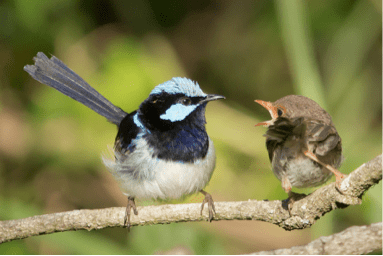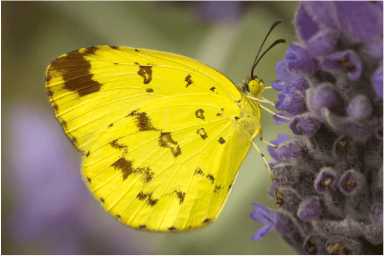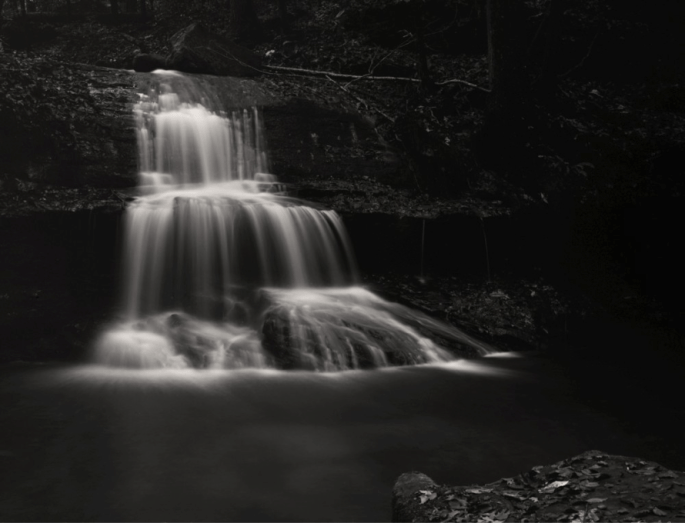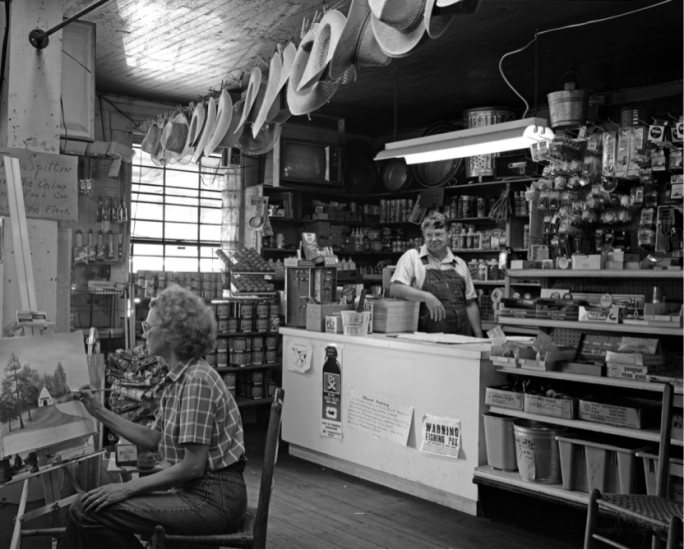
There’s No Business Like Snow Business!

This post was inspired by a friend’s recent ‘Snow-misadventure…’

Back in the 1980’s, I was part of a 18-35years Church Social Group and one of adventures was to the Snowy Mountains in southern NSW, Australia. It was one of those hurried 3 day weekend trips that saw me (briefly) on Ski’s but mostly on a Toboggan, which (for me) at the time was a lot more fun, that is until a had a slight ‘run-in’ with a creek. That was my first time in the Snow. I was satisfied with that. Visit to the Snow ticked off the list.

The very next year (1984) I was invited back to the Snowy Mountains by a small group of school friends who were planning to go for a whole week. Sounded fun so I agreed.

We stayed at Jindabyne and travelled to the ski fields from there. Jindabyne is basically the closest town to the ski fields but is not actually in them.

The previous year I had an hour ski lesson but I thought it was prudent to have another, and so I did, only this time it was snowing fairly heavily and to this day I wonder if I perhaps missed some ‘key technical points’ that would have helped immensely later on?

Most of my friends had Skied before and one friend in particular, David was a bit more experienced but he decided to hang back with me whilst I was endeavouring to ‘glide’ down the run called the ‘Pretty Valley Triple’ at Perisher Valley.

Needless to say that after a short time, I thanked David for staying with me but said that he would probably have more fun if he went on and left me to my own devices as I didn’t want him to get bored…

Off he glided down the hill…

Thinking back to the Ski lesson, I remember the lessons on how to ’Snowplough’ (or stop) & they taught us about weight control/which way to lean if we wanted change direction. It seemed fairly easy where we did the lesson. It was relatively flat ground.

Thinking back, I would have weighed about 55Kg and was 185cm tall so I didn’t have a lot of weight to throw around.

When you fall skiing it’s not as soft a landing as would think and in my first journey down the Pretty Valley Triple run I fell seventeen times. What would you do?
400448_4118030482861_1801064679_n
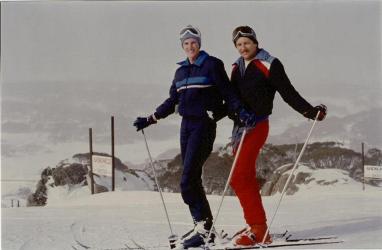
David & David Skiing @ Perisher 1984 – I am the David on the left.

I went back up to try again. This time I only fell seven times, an obvious improvement, though the 24 clashes with Mother Earth had left me bruised and battered. Somehow though, I had managed to miss every tree.

My mistake that day wasn’t that I had fallen 24 times attempting to ski, it was the fact that I made the decision to return my gear to the ski hire place and go to the local bar for three beers (muscle relaxant). I haven’t skied since….

On pondering why I stopped, I remembered I hated the icy weather, the ski boots – I found them painful to wear around the ankle section of the leg, much of me was sore & I was skiing on my own. Given that and the ‘person I was as a 21 year old’ I can see why I gave in.

It is easy to look back and say ‘I would have done it differently’ but I can honestly say that if I was the person I am now, I would have gone back up and maybe only fell 3 times and so on… That’s not to say that I would be down the Snowy Mountains skiing every year, but it would be fun to have the option…

My wife, Susan has mentioned ‘going to the Snow’ a few times over the years as he has skied before. At 53, I wonder if the time for skiing has passed?

I would still like to go back to the Snow but this time it probably would be a photographic expedition, but you know what they say…’never say never….’

Written by David Johnson
23 July 2016
Viewing Life

Back in the year 2000, my wife and I were touring around southern NSW and visited (among other places), Yarrangobilly Caves. They are but one of a number of beautiful examples of limestone caves here in Australia.

We received a guided tour that day and apart from the memory of the caves, I remember a conversation I had with the tour guide as he, like me, was into photography for a great part of his life. This was until one day, after a 20 year love affair with the medium, he gave it away, citing that, ‘he was tired of looking at the world through a rectangle…’.

I didn’t think of this again until recently when I began reflecting on my photographic journey. Unlike the tour guide, I have not given up photography (as I will love it till I pass from this world), however I now have other interests as well and these days I am a bit more selective of what I photograph with my DSLR (and at this point I’m refining my ‘Light Inspired’ photography business as well). My phone is with me just about everywhere and images from that end up on Instagram.

Starting my photographic journey in 1982, I too have looked at the world through a rectangle via 35mm and through a square via a medium format camera. When I wasn’t with family, friends or at work, I was involved in photography in some way, shape or form since that time, either photographing, developing, printing, editing, reading about the subject, attending a Camera Club (or two) or judging photography. The ‘other’ interests I speak of are Toastmasters/public speaking (since 2008), drawing/painting (since 2010) and writing/writing poetry (since 2013).

Whereas once I would only be thinking and communicating about the world via photography, I now attempt to do this in a number of ways (depending on how I feel that I want to communicate it) and it is a lot of fun.

Life is about having experiences, fun, creativity, overcoming challenges, helping others, growth and communication.

I now enjoy seeing the world in different ways, not just through a camera. In some ways, I feel like my journey has just begun…

Written by David Johnson
June 2016

“Solitary Moments”

This blog post is inspired by a Photography Exhibition I went to today.

The Exhibition featured the images of Chris Donaldson, Frank Alvaro, Ray Finneran, Enrico Scotece and Paul Dorahy, three of whom I have known personally for many years. They specialise in Medium Format Monochrome Film Photography, and develop and print their own images.

“Solitary Moments” for them are those moments when they pre-visualise the idea and image, then spend the time photographing the scene, with the camera on a tripod. It is quite likely that they may only take 1 – 4 images in a day… Their “Solitary Moments” continue in the act of developing the negatives and seeing the finished prints appear ‘like magic’ in the developing tray.

Having experienced the above, I can certainly identify with the “Solitary Moments” they are speaking about.

Shooting Medium Format Film from a tripod-mounted camera slows you down. This helps you get a feel for the scene that you want to photograph i.e. the greater connection you have with the subject the greater chance you have of communicating what you want to say. Here the pre-visualisation continues as you imagine what the final image will look like before you take the photo.

It is later, in the Darkroom that you continue the process to achieve what you set out to communicate initially.

It reminds me of the “Solitary Moments” I have and am experiencing in my aim to become a better writer of Poetry and my fledgling steps of becoming an Oil Painter.

The processes whilst different in terms of the technology used, have some parallels.

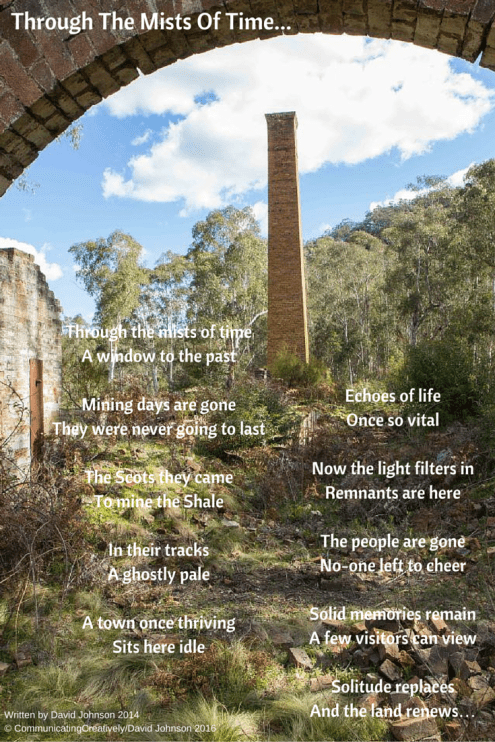
I remember on my last trip to Joadja, a historical Shale Mining town in New South Wales, Australia. I took my camera gear and a visual art diary, pens and pencils with me.

These days I shoot digital and whilst the urge was there to do what many do with DSLR’s these days, i.e. shoot a 100 shots and then move on, I decided to sit down and ‘get a feel’ for what was in front of me, absorb the sense of history whilst studying the light and possible compositions.

The pencils came out first and I began to make some rough sketches after walking around the subject. I jotted down in a few words about how I felt and what I was seeing (which later became the poem below). The camera came out next and I again walked around the scene, pausing to take it all in before I started to shoot.

Through The Mists Of Time...

“Solitary Moments” are precious things to experience.

They also come whilst I am fleshing out an idea for a poem, when I sit at my canvas and endeavour to communicate what I feel I want to say, or when I am writing a speech.

I, like the photographers in today’s exhibition are looking forward to many more…

Written by David Johnson
1 May 2016

Exhibition details:

The Bowral Art Gallery – home of the Bowral & District Art Society & BDAS workshops. 1 Short Street, Bowral NSW Australia (02) 4861-4093
April 27 to May 10 Solitary Moments – Chris Donaldson, Ray Finneran, Frank Alvaro, Enrico Scotese and Paul Dorahy.

For more “Solitary Moments” click on the following links:

http://www.chrisdonaldson.com.au
http://www.rayfinneranphotography.com


Where Is The Mystery?

When I first started photographing seriously (early 80’s), one of the attractions of photography was the mystery of how one would be able to achieve the image. In this instance I am talking about the technical process rather than the imaginative one that is connected with the idea or desire to portray a subject/emotion.

It was (and remains) a fascinating process. Light entered the camera and exposed the film which then was developed, then printed. There were a number of variables at each stage that could alter the way the image was captured and developed, let alone the printing process in the Darkroom.

To obtain a technically proficient image one had to perfect the techniques required to obtain the best possible image in your negative or positive image.

Fast forward to the Digital world. For some years now (due to the advances in technology, and indeed the Digital format itself), it has never been easier to obtain a ’technically proficient’ image in terms of the basic reproduction of a scene.

On the one hand, this is a positive, as it allows the photographer to concentrate more on the ‘creative’ side of things, knowing that they have the initial in-camera/process taken care of. On the minus-side it has taken away skills, enjoyment and a sense of challenge that many found to be a key part of the photographic process. Learning to choose the appropriate film, exposure, development time etc to gain a negative or positive that would help produce the desired results in printing was the goal.

There was a certain ‘mystery’ connected with the early part of the process i.e. through the processing of film and the effect of light on silver halides through exposure and development (before the darkroom printing stage) which has been lost to a certain degree. Once learnt, those techniques could be applied, but of course that took time…

I am not for one minute saying Digital is a bad thing as the Digital process has brought with it many benefits, one I have already alluded to. I shoot Digital myself.

Of course we do have the wonderful world of image manipulation programmes where we have the choice to alter images with abandon, depending on what we want to achieve. This is a great thing. With all this at our disposal though, sometimes I wonder if the technical aspects of photography have been made too easy?

Even though my passion for photography is as strong as it always has been I have (in the last few years) been slowly getting interested in painting and am currently learning Oil painting. There is certainly a ‘mystery’ there in terms of getting a ’technically proficient’ image.

I cannot just go out and purchase a brush/canvas/paint combination that will give me a technically proficient image. One has to endeavour to learn the skills, practice, make mistakes, learn some more, and repeat the process. (I am aware that I could do ‘Oil’ Painting digitally but that doesn’t hold an interest for me). Once I get better at these skills I will be able to communicate what I want to say, better and in more creative ways.

I love Art and my love for photography will continue throughout my life however my love for painting has increased with each passing year, to a point where I now aiming to allocate a certain amount of time every weekend to painting.

Much like coming up for an idea for a photograph or looking at a scene through a viewfinder, I can look at my blank canvas and proceed to paint an idea or sit outside and interpret a scene.

Ultimately though, what continues to separate individual photographers and individual painters is our imagination and the ability to convey the desired idea through creativity and technical skill.

Harry Callahan, Photographer – 1912 -1999 once said:

“The mystery isn’t in the technique, it’s in each of us…” – More Joy of Photography, Eastman Kodak – 1981

Where is the mystery?

“The mystery is in the learning and application of the technique which we then use via personal expression to creatively communicate our ideas…”

Written by David Johnson
2 April 2016

Profiling Photographers – Barry Moore

I first met Barry Moore via my membership in Toastmasters International. Barry is also a member and previously was the District 70 Toastmasters Official Photographer, and is an accomplished speaker himself. Thank you Barry for participating in this series.

Gear: Canon 5D Mkii, 50D, 400D, EOS-M – various L and non-L lenses from 10mm to 400mm. Panasonic Lumix DMC-TZ30 is my favourite portable camera for bushwalking.

  • Why did you choose Photography as your medium of communication?  

I have always enjoyed the creative process. Snapshots capture a moment in time but can tell a story as well. Landscape’s convey the beauty and isolation of a remote areas as well as the memory of the adventure. I started with an instamatic slide camera, then a TTL 35mm SLR (Hanimex Aka Practika clone). Then an OM1 for ages before the digital revolution. But it’s not the camera or lens. Often it’s that you see the shot or anticipate the shot and then capture it. There almost a sense of a “hunt” for the best shot and then the smile of satisfaction of “nailing” the composition.

  • Which Photographers have been the greatest influences on you & why? 

Ansel Adams and David Moore are great examples – they tell a story with a single image. My current favorite in Ken Duncan. Sheer beauty and the enormous patience to get his compositions right are amazing.

  • What inspires you to create the type of images that you do?                

I want a “wow” or “Ah” when people see my pictures. I love remote areas and it is great to be able to share the image and location with them.

  • What do you think makes your style unique? 

I like all style…. Deep silhouettes and shadows give great depth to an image, so I look for this.

  • Do you have any advice for an aspiring photographer? 

Practice and experiment. Attention to details is paramount. Check the background always and remove all distractions from the image if you can. Get rid of any ‘bad’ photos and try to only show the best. It’s hard to do this though.

  • What is the next big adventure for you, photographically?

I want to do some model photography or street candids. It’s an area I am lacking in.

To explore more of Barry’s creativity, click on the following inks:

http://www.pbase.com/barry_2718

http://www.modelmayhem.com/barry2718

Eligia Sword – Profiling Photographers


Welcome to another instalment in the series, Profiling Photographers. Eligia is passionate about photography and wildlife and very active in the Camera Club world in Brisbane. I hope you enjoy her insights and photography as much as I do. Thank you Eligia for being part of this series.

Gear:

Canon 5DMk3 Camera. Lenses: 100-400, 24-105, 100 Macro and 50 Prime 1.8. My next purchase will be a wide angle lens.

Why did you choose Photography as your medium of communication?

I won a minor footy tipping contest and decided to buy a camera. Joined a Camera Club, took some beginner’s lessons and haven’t looked back since. It is not a passion, it has become an obsession in a good way.

Which Photographers have been the greatest influences on you & why?

I don’t have any favorite photographers at the moment. I visit lots of Websites, read magazines, go to photo exhibitions and join online photography sites to expand my knowledge of the type of photographs that are possible to create. I have learnt a lot at the Photographic Club with the guest speakers, long time members and entering the monthly competitions.

UntitledES1

What inspires you to create the type of images that you do?

I like to go for a walk in the morning and my camera comes with me. I have developed a great interest in birds, bugs and butterflies. I don’t have any trouble finding any of those in the local parks and if I can’t get out and about I can always find some in my back garden.

What do you think makes your style unique?

 I’m a bit of a perfectionist and I don’t give up on a photo until I’m satisfied that I couldn’t do any better.

UntitledES2

Do you have any advice for an aspiring photographer?

Have your camera with you at all times. Photograph most days if you can and try all sorts of photography. Eventually you will find what you are good at and when that happens I bet you won’t be able to stop.

What is the next big adventure for you, photographically?

I would love to go to Africa. To me it would be the ultimate wildlife adventure.

The next photographer in the series will be ‘Barry Moore.’

Opportunity Knocks!

In July 2015, I was offered a speaking spot at Campbelltown Probus Club on 27 January 2016 by Nola who was on the Executive at the club, whilst we working at an Election Day Polling Booth.

A Probus Club is an organisation for retired or semi-retired business or professional people, and operates worldwide.

In Toastmasters International, we are taught that, ’if you are offered a speaking opportunity then you should take it’ whether that is inside or outside Toastmasters.

Remembering this, at the time, I had absolutely no hesitation in saying, yes! As Nola began to fill me in some more details, like the speaking time (40 minutes) and audience (up to 120 people), I started to realise the enormity of the experience, compared to what I had done previously…

It is amazing sometimes how fear and doubt can creep into the psyche.

The choice of the topic was left up to me and I decided to speak on the subject of ‘Communicating Creatively’ a subject that is very dear to my Heart. The one thing I didn’t want it to be though was ‘ok, this is what I do’ and that’s it. That would only be an information talk only and if the audience wasn’t particularly interested in photography, poetry, writing or painting then it could be quite dry for them.

What I needed to do was to involve the audience as it is they, the audience who are the most important people during the speech, not the speaker.

There were two main objectives that I had set for the speech:

  • To convey and obtain agreement that we are all creative to some extent
  • To show people ways that they can communicate creatively

One of the best ways to commence a speech is to involve the audience straight away via a question. There were 100 people attending that day and I asked for a ’show of hands’ of those who thought that they were creative in some way? 3 hands went up…

I explained to them that often the word creativity is often thought of only in terms of Arts & Crafts and went on to say that if we were to list all the previous occupations in the room, there would (I imagined) be quite a diverse range or White Collar, Blue Collar workers: Accountants, Engineers, Retail, Teachers, Public Service etc.

Engineers e.g. need to be creative to solve problems, don’t they? Henry Ford wanted 8 cylinders cast in one block. His engineers told him it could not be done. Henry Ford told them to find a way. They used their creativity to solve the problem.

Another show of hands was requested. This time about half the room put up their hands.

After opening their minds as to the fact that they were creative, I began to show them ways I communicate creatively, i.e. through Photography, Writing, Poetry & Painting and how they could too.

The presentation over, a number of people came up to me asking questions and stating that they intended on exploring photography, painting etc. This pleased me.

If I had said no to the opportunity I would have missed out on the following:

  • A chance to converse and connect with 100 people and hopefully inspire them
  • A chance to practice my presentation and public speaking skills
  • Presenting my longest presentation/longest PowerPoint to the largest number of people
  • The chance to present using a microphone
  • A chance at getting another speaking spot with another Not-4-Profit organisation

Was I nervous? Yes, definitely! In fact I was probably 10 times as nervous as when I competed at a Division Final International Speech Contest (a 5-7 minute speech in front of 100 Toastmaster members), probably because this presentation was outside the Toastmasters environment, i.e. the real world.

I said yes to the opportunity because of my involvement with Toastmasters, which has given me the confidence to step outside my comfort zone and take on new challenges.

It is only by practice, making mistakes, revision, more practice etc that we improve. I have a long way to go to get to where I want to be as a Public Speaker but am sure having fun on the journey!


David Johnson
March 2016

John Alexander Dersham – Profiling Photographers

Welcome to Profiling Photographers #4. I ‘met’ John through Facebook and he introduced me to the inspired vision of his photography. John has a richness and depth in his photography that I’m sure you will all enjoy. Thank you to John for being part of this series.

Gear:

Canon 5D with L-type lenses for digital.

Large format film cameras for film-Toyo 8x10M and Wista and Linhof 4×5 cameras-Schneider, Fuji and Nikkor lens from 90-450mm.

1. Why did you choose Photography as your medium of communication?

I started at age 9 using my dad’s 1930 Brownie. I loved capturing fleeting moments and liked composing images for artistic values. I have stayed with the art form all of my life. I am now 64 years old.

Untitledjd1

2. Which Photographers have been the greatest influences on you & why?

Andy Tau, former member of Ansel Adams F64 club and former President of the School of Photojournalism at the University of Missouri. I joined the Mid-Missouri Camera Club in 1966 of which he was a member. He taught me the Ansel Adams methods along with Roger Berg and Milt Shanklin who were both in the club. They provided a very great amount of help to me at a very young age in areas of composition and technical skill.

Ansel Adams, Winston Link,Dorothea Lange and Edward Weston all played a role in inspiring me and serving as visual guides helping me learn to see my personal visions.

3. What inspires you to create the type of images that you do?

I like images that are both beautiful but also have a story associated with the images. Sometimes the story is about the impact of the image created by the lighting or weather conditions like rain, snow, fog.

I also love to shoot images of people in settings that have a story behind them, like their place of business, such as; a store, a factory or a craft.

4. What do you think makes your style unique?

I think my view of the world is a bit different and it is reflected in my work compositionally but also in the way I interpret light and compositional elements. I tend to shoot wide in order to tell a story with more content.


Untitledjd2

5. Do you have any advice for an aspiring photographer?

I suggest having a passion for a subject that is all yours. When people view your work it should not be a repeat of everyone else’s view. Waterfalls and sunsets are wonderful and fun to shoot but they will not make a photographer famous nor will they deliver any suggestion of being unique. You have to create a style both in subject matter and compositional values that viewers can immediately tell it is your work.

6. What is the next big adventure for you, photographically?

I am working on a couple of books and brochures for the travel industry related to promoting the scenic beauty of the Southeast United States.

I am also working toward a B&W book called “Where the Road Ends”. These images are mostly large format B&W images of views of long-term business locations that have been in families for generations or have already closed but the their story still can be told in the images of their slow decay along the roadsides of America.

www.johndersham.com

John Alexander Dersham Classic Fine Art B&W on Facebook
https://www.facebook.com/John-Alexander-Dersham-Classic-Fine-Art-Black-and-White-Photography-313045360458/?fref=ts


Follow my blog with Bloglovin

Profiling Photographers – Fiona Brook

Welcome to the third instalment of ‘Profiling Photographers.’ I first met Fiona when judging at St.George Leagues Photographic Club. I hope you find her images and attitude to image-making as inspirational as I do. Thank you, Fiona for contributing to this series.

Gear:

Nikon D600;
Tamron 24-70mm f/2.8; Nikon 70-200mm f/2.8; Tamron 150-600mm f/5-6.3
Tamron 90mm f/2.8 macro; Lensbaby Composer; Samsung Galaxy S5

Why did you choose Photography as your medium of communication?

My father was a very keen photographer, and I guess I followed his example. Ever since I discovered that photography meant I could make and keep images, I have loved it!

Untitled1

Which Photographers have been the greatest influences on you & why?

1. My Dad – because he was the first and foremost photographer in my life. Subsequently, his sister (my aunt) was a great influence.

2. So many photographers at the St George Leagues Club Photographic Society, because that is where I rediscovered my photographic self 7 years ago.

3. Current influences are Sue Robertson, Rob Smith, Karen Scrimes, Des Crawley, John Swainston, Alister Benn, Darren Jew . . . etc, etc, too numerous to mention!

4. Then, there are the classics of course – Cartier-Bresson etc. Again, too numerous to mention.

What inspires you to create the type of images that you do?

The extraordinary power of nature is my primary inspiration. I am constantly drawn to natural phenomena and their inherent beauty. After winning the biology prize at school back in Scotland in the 1980’s, I was introduced to the films of David Attenborough. Since that time, my biggest dream has been to make wildlife films that document the extraordinary wonders of this amazing world we live in.
Maybe one day . . .

What do you think makes your style unique?

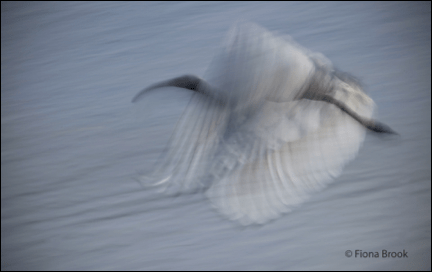
It took me ages to find my “style”, but I think in recent times I have found an impressionistic style that says what I want to say with my wildlife photography (especially birds).


Untitled2

Do you have any advice for an aspiring photographer?

I still think of myself as an aspiring photographer, so it’s difficult for me to give advice in that regard. If I were to give general advice about life, it would be – DON’T BE AFRAID! Fear is a disabling emotion 🙂

What is the next big adventure for you, photographically?

I have no idea – that’s what makes it a big adventure!

To view more of Fiona’s images, please click on the following link

http://www.fionabrookphotography.zenfolio.com

Profiling Photographers – Kenneth Hall – Gwondana Photography Pty Ltd

Welcome to the second instalment of ‘Profiling Photographers.’ I have known Kenneth Hall for many years via a few different projects/associations. Kenneth, through his background and interests, has a unique view of Australia which he imparts to those who view his photography and of course, his customers in his growing ‘Australian Photography Tours’ business. Thank you to Kenneth for agreeing to be part of this series.

Gear: Primary Canon 5D plus range of L series lenses

1. Why did you choose Photography as your medium of communication?

I have spent all my life outdoors starting as a child on the Yorkshire Moors with my father followed by many years travelling the world as a professional soldier and finally immigration to Australia.

I was also a dedicated solo bushwalker later developing and operating bushwalking clubs as well as being a member of six additional clubs.

I love nature so it was a natural step to take for me into photography.

Australia is a good place to be as a photographer and living in Macarthur gives me access to many areas of NSW.

The colours of Australia are superb, particularly dawn, sunrise and sunset. Much of my photography is undertaken at these times.

What better way to communicate with people than using colour?

Most people are visual and to use that old saying “a picture says a thousand words.”

Untitled


2. Which Photographers have been the greatest influences on you & why?

Ansel Adams, his landscapes are superb and created with the minimum of equipment.

Several from National Geographic – they are engaged in many projects around the world. One example is Paul Nicklen. They have the reputation, money and backing of an internationally known organisation. I associate their photographers with high-quality photographs with very daring and difficult to obtain compositions

Alfred Stieglitz – for his contribution to photography. It is wonderful to be known for what one did and remembered with affection.

“Adams credits three people for driving his interest in photography, Wesson and Strand and Stieglitz but it is Stieglitz that he regarded as the most important. He also regarded that first solo show in New York as the most important of his career.”

Steve McCurry – in particular for his “Afghan Girl”. Pay him a visit, his gallery says it all “http://stevemccurry.com/galleries”

3. What inspires you to create the type of images that you do?

Australia and NSW. I never become bored with nature, it is a passion.

Photography, when used in tours leads onto other things. My clients have many questions about Australia, its people, nature and our First People.

I have led a great life, none so good as my now nearing 40 years in Australia.

At one time whilst working on a four-year project on Longwall mining I was privileged to spend one day every week with a tribal elder. It was the most incredible education.

This led onto research as far back as Gondwana and the super-continent Pangea.

Our business reflects this in the choice of Gwondana, the birth of Australia as it broke away from Pangea.

I am a very proud Australian by choice.

Besides being heavily involved in landscape photography and in my book that covers everything but weddings, portraits and modelling I still do commercial photography for my clients.

This came about because of the high prices charged by professional photographers when I was optimising clients websites.

4. What do you think makes your style unique?

I don’t know that I have a unique style. If I have then I hope it is for a celebration of Australia.

Untitled2K


5. Do you have any advice for an aspiring photographer?

Get out of bed early.

Seek advice, find a mentor, learn patience and practice.

Photography is all about people, not equipment.

6. What is the next big adventure for you, photographically?

I have already started on a heritage buildings project.

In 2016, I will be visiting the UK, Canada and Alaska.

We have now taken on board the NSW Central West in the Goldfields and hooked up with Viator and a large Australia wide real estate organisation.

More of Kenneth Hall’s images can be viewed at:

Australian Photography Tours – Gwondana Photography Pty Ltd

http://www.australian-photography-tours.com

http://www.australian-sightseeing-tours.com.au

https://plus.google.com/+Australianphotographytours698/posts

https://www.facebook.com/pages/Australian-Photography-Tours/319705881489289

https://www.facebook.com/naroomaphotographytours

http://34-kenneth-hall.artistwebsites.com/