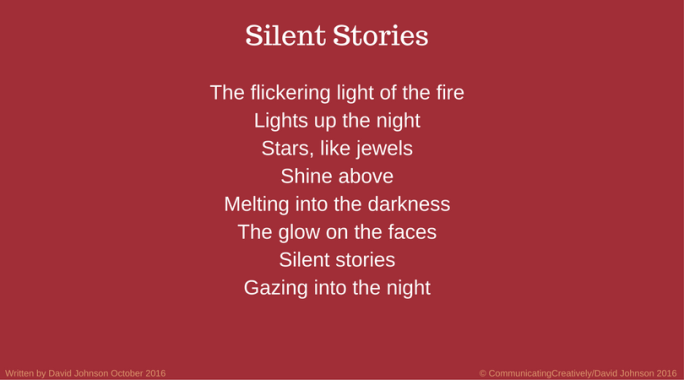
Silent Stories
I love it when I see an Artist’s creations and they have that much of an impact on me that it changes the way I think about my own.
In this case I’m taking about the latest episode on Colour In Your Life, featuring Sydney Artist, Sandra Blackburne which was aired in Sydney last night, and which I have now watched for the second time.
I would class myself as a ‘Beginner’ in terms of painting as my creative background has been through Photography, over the past 35 years. It started as a bit of a hobby about 5 years ago, though and I only ‘painted when I could fit in it’ as I have had other full-time occupations in that time. In January this year I decided that I would allocate 2-4 hours per weekend to my Oil painting and so far I have only missed out once, and I made sure I doubled the amount the following weekend. 😃
As I watched the episode, taking notes (as I do with each one), quite a few things resonated with me and have given me food for thought, such as:
My style (if indeed I have one yet) seems to be more to ’try to paint subjects in a pictorial way.’ I remember when I did a basic Drawing course 6 years ago, the teacher said that appeared more a ‘Line Drawer’ than a ’Tone Drawer.’
Part of the challenge for me I guess is that coming from a photographic background, I’m too used to seeing subjects in a pictorial presentation rather than a fluid, abstract way, i.e. when I paint a leaf, a tree, or a building I try to capture all the detail when I don’t need to…
Looking at Sandra Blackburne’s Art I see sheds, trees and other subjects as perhaps ‘how I would remember them after a period of time has elapsed’, rather than as if they are in front of me, right then.
Sometimes I paint from photographs, sometimes from my imagination. I know which is more fun! A bridge between the photograph and the imagination is perhaps a Plein-Air sketch or two, which will then allow me to ‘put more of myself’ into a painting.
Thank you, Sandra Blackburne for your Art and inspiration. I look forward to seeing your Art face-to-face. Thanks also to Graeme Stevenson and to the team from ‘Colour In You Life’ for bringing such Art and inspiration into our Lives!
The journey to find my personal style continues…
Written by David Johnson
21 May 2016
Links:
https://www.instagram.com/sandrablackburne/
https://www.youtube.com/results?search_query=colour+in+your+life+tv+show
When I first started photographing seriously (early 80’s), one of the attractions of photography was the mystery of how one would be able to achieve the image. In this instance I am talking about the technical process rather than the imaginative one that is connected with the idea or desire to portray a subject/emotion.
It was (and remains) a fascinating process. Light entered the camera and exposed the film which then was developed, then printed. There were a number of variables at each stage that could alter the way the image was captured and developed, let alone the printing process in the Darkroom.
To obtain a technically proficient image one had to perfect the techniques required to obtain the best possible image in your negative or positive image.
Fast forward to the Digital world. For some years now (due to the advances in technology, and indeed the Digital format itself), it has never been easier to obtain a ’technically proficient’ image in terms of the basic reproduction of a scene.
On the one hand, this is a positive, as it allows the photographer to concentrate more on the ‘creative’ side of things, knowing that they have the initial in-camera/process taken care of. On the minus-side it has taken away skills, enjoyment and a sense of challenge that many found to be a key part of the photographic process. Learning to choose the appropriate film, exposure, development time etc to gain a negative or positive that would help produce the desired results in printing was the goal.
There was a certain ‘mystery’ connected with the early part of the process i.e. through the processing of film and the effect of light on silver halides through exposure and development (before the darkroom printing stage) which has been lost to a certain degree. Once learnt, those techniques could be applied, but of course that took time…
I am not for one minute saying Digital is a bad thing as the Digital process has brought with it many benefits, one I have already alluded to. I shoot Digital myself.
Of course we do have the wonderful world of image manipulation programmes where we have the choice to alter images with abandon, depending on what we want to achieve. This is a great thing. With all this at our disposal though, sometimes I wonder if the technical aspects of photography have been made too easy?
Even though my passion for photography is as strong as it always has been I have (in the last few years) been slowly getting interested in painting and am currently learning Oil painting. There is certainly a ‘mystery’ there in terms of getting a ’technically proficient’ image.
I cannot just go out and purchase a brush/canvas/paint combination that will give me a technically proficient image. One has to endeavour to learn the skills, practice, make mistakes, learn some more, and repeat the process. (I am aware that I could do ‘Oil’ Painting digitally but that doesn’t hold an interest for me). Once I get better at these skills I will be able to communicate what I want to say, better and in more creative ways.
I love Art and my love for photography will continue throughout my life however my love for painting has increased with each passing year, to a point where I now aiming to allocate a certain amount of time every weekend to painting.
Much like coming up for an idea for a photograph or looking at a scene through a viewfinder, I can look at my blank canvas and proceed to paint an idea or sit outside and interpret a scene.
Ultimately though, what continues to separate individual photographers and individual painters is our imagination and the ability to convey the desired idea through creativity and technical skill.
Harry Callahan, Photographer – 1912 -1999 once said:
“The mystery isn’t in the technique, it’s in each of us…” – More Joy of Photography, Eastman Kodak – 1981
Where is the mystery?
“The mystery is in the learning and application of the technique which we then use via personal expression to creatively communicate our ideas…”
Written by David Johnson
2 April 2016
I first met Barry Moore via my membership in Toastmasters International. Barry is also a member and previously was the District 70 Toastmasters Official Photographer, and is an accomplished speaker himself. Thank you Barry for participating in this series.
Gear: Canon 5D Mkii, 50D, 400D, EOS-M – various L and non-L lenses from 10mm to 400mm. Panasonic Lumix DMC-TZ30 is my favourite portable camera for bushwalking.
I have always enjoyed the creative process. Snapshots capture a moment in time but can tell a story as well. Landscape’s convey the beauty and isolation of a remote areas as well as the memory of the adventure. I started with an instamatic slide camera, then a TTL 35mm SLR (Hanimex Aka Practika clone). Then an OM1 for ages before the digital revolution. But it’s not the camera or lens. Often it’s that you see the shot or anticipate the shot and then capture it. There almost a sense of a “hunt” for the best shot and then the smile of satisfaction of “nailing” the composition.
Ansel Adams and David Moore are great examples – they tell a story with a single image. My current favorite in Ken Duncan. Sheer beauty and the enormous patience to get his compositions right are amazing.
I want a “wow” or “Ah” when people see my pictures. I love remote areas and it is great to be able to share the image and location with them.
I like all style…. Deep silhouettes and shadows give great depth to an image, so I look for this.
Practice and experiment. Attention to details is paramount. Check the background always and remove all distractions from the image if you can. Get rid of any ‘bad’ photos and try to only show the best. It’s hard to do this though.
I want to do some model photography or street candids. It’s an area I am lacking in.
To explore more of Barry’s creativity, click on the following inks:
The rush of the wind
The falling of snow
Street lamps flicker
Causing the night to glow
The shops are like jewels
Along the streets
Like ships in a harbour
An organised fleet
Silently they stand
In the still of the night
Waiting for morning
For people to take flight
Queuing they will
For the lowest of prices
Ready to snap up
Those wonderful appliances
Through the hustle and bustle
Of that long-sales-day-grind
The staff will try to be
Both patient and kind
And when it’s time to close
The sales day is done
People return to their homes
And look over what they’ve won
The street returns to silence
The night begins to fall
The shop goes to sleep
Until the next sales day calls.
Written by David Johnson
27 December 2015
© CommunicatingCreatively/David Johnson 2015
Welcome to Profiling Photographers #4. I ‘met’ John through Facebook and he introduced me to the inspired vision of his photography. John has a richness and depth in his photography that I’m sure you will all enjoy. Thank you to John for being part of this series.
Gear:
Canon 5D with L-type lenses for digital.
Large format film cameras for film-Toyo 8x10M and Wista and Linhof 4×5 cameras-Schneider, Fuji and Nikkor lens from 90-450mm.
1. Why did you choose Photography as your medium of communication?
I started at age 9 using my dad’s 1930 Brownie. I loved capturing fleeting moments and liked composing images for artistic values. I have stayed with the art form all of my life. I am now 64 years old.
2. Which Photographers have been the greatest influences on you & why?
Andy Tau, former member of Ansel Adams F64 club and former President of the School of Photojournalism at the University of Missouri. I joined the Mid-Missouri Camera Club in 1966 of which he was a member. He taught me the Ansel Adams methods along with Roger Berg and Milt Shanklin who were both in the club. They provided a very great amount of help to me at a very young age in areas of composition and technical skill.
Ansel Adams, Winston Link,Dorothea Lange and Edward Weston all played a role in inspiring me and serving as visual guides helping me learn to see my personal visions.
3. What inspires you to create the type of images that you do?
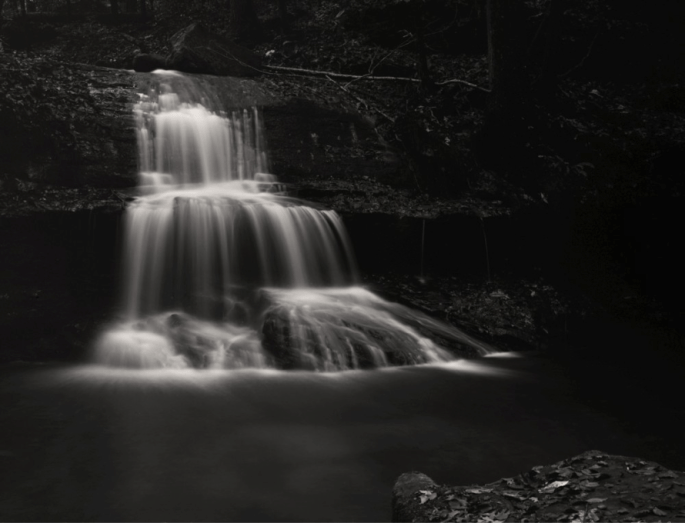
I like images that are both beautiful but also have a story associated with the images. Sometimes the story is about the impact of the image created by the lighting or weather conditions like rain, snow, fog.
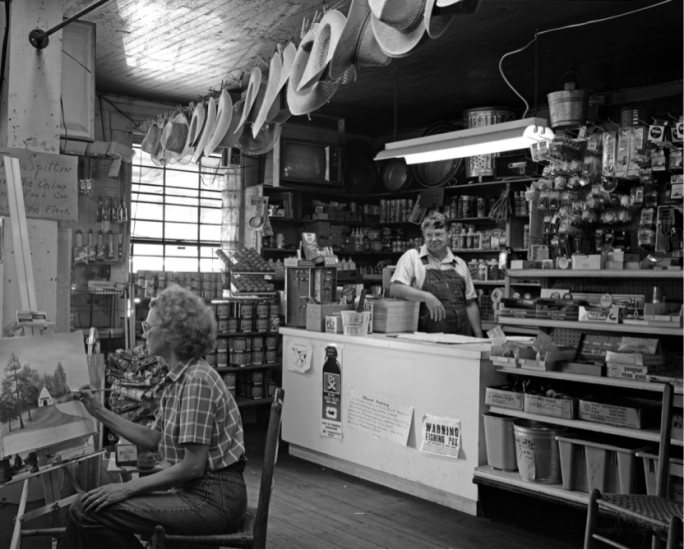
I also love to shoot images of people in settings that have a story behind them, like their place of business, such as; a store, a factory or a craft.
4. What do you think makes your style unique?
I think my view of the world is a bit different and it is reflected in my work compositionally but also in the way I interpret light and compositional elements. I tend to shoot wide in order to tell a story with more content.
5. Do you have any advice for an aspiring photographer?
I suggest having a passion for a subject that is all yours. When people view your work it should not be a repeat of everyone else’s view. Waterfalls and sunsets are wonderful and fun to shoot but they will not make a photographer famous nor will they deliver any suggestion of being unique. You have to create a style both in subject matter and compositional values that viewers can immediately tell it is your work.
6. What is the next big adventure for you, photographically?
I am working on a couple of books and brochures for the travel industry related to promoting the scenic beauty of the Southeast United States.
I am also working toward a B&W book called “Where the Road Ends”. These images are mostly large format B&W images of views of long-term business locations that have been in families for generations or have already closed but the their story still can be told in the images of their slow decay along the roadsides of America.
John Alexander Dersham Classic Fine Art B&W on Facebook
https://www.facebook.com/John-Alexander-Dersham-Classic-Fine-Art-Black-and-White-Photography-313045360458/?fref=ts
Urban sketches, etchings, watercolours, pen and ink.
A Daily Visual Journal
Practical advice for a happier, fuller, and more meaningful life
INSPIRATIONAL KWOTES, STORIES, and IMAGES
Malaysian author and storyteller
Welcome to my mind. Watch the first step, it's a doozy.
A look at life, achieving good physical and mental health and happiness
embrace the magic
Just another WordPress.com site
A place where words come alive
Learn more about an independent artist who creates a unique style of music all his own.
Discovering the joy of art
Writing, Poetry, book reviews, interviews, music reviews, contests, art
Mostly photographs with some words by this arty scientist...
Artist by choice, photographer by default, poet and author by accident.
"Rêve onirique & Bulle d'évasion"
Life is all about being curious, asking questions, and discovering your passion. And it can be fun!
By JMACTHEDREAM
Adevărata graniţă a libertăţii este gândirea. - Juliana Mallart
Listen to your inner self..it has all the answers..
For the love of pens, paper, office supplies and a beautiful place to work
Pens, inks, notebooks and other accessories
Adventures in Watercolor Painting and Sketching, Watercolour Magazine, with Charlie O'Shields
Poetry From the Heart!
The latest news on WordPress.com and the WordPress community.
Become the oil and wine in today's society.
I want to be rich. Rich in love, rich in health, rich in laughter, rich in adventure and rich in knowledge. You?
If you want to be a hero well just follow me
I dream so I write ..
Musings on poetry, language, perception, numbers, food, and anything else that slips through the cracks.
Jane Lurie Photography
An Independent Nondiscriminatory Platform With No Religious, Political, Financial, or Social Affiliations - FOUNDED 2014
Random Ravings from an Old Bloke Down Under
By Periwinkleblur
Author, Blogger, Social Media Jedi
Where observation and imagination meet nature in poetry.
Original poetry, commentary, and fiction. All copyrights reserved.
 Communicating Creatively