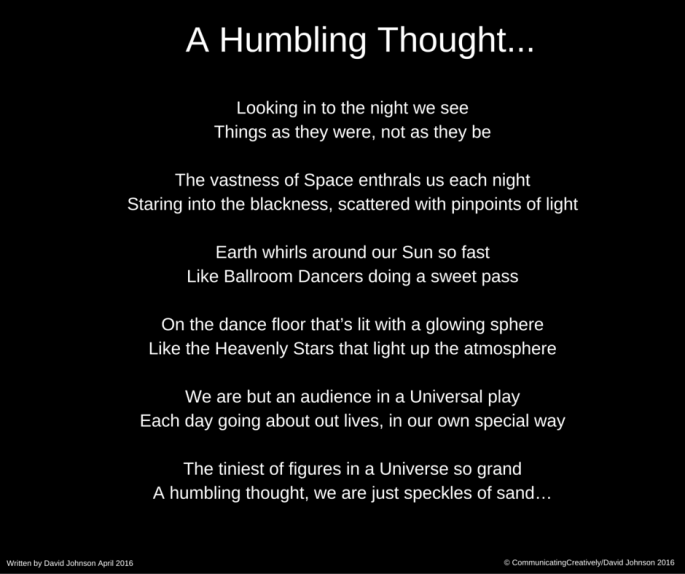
A Humbling Thought…
When I first started photographing seriously (early 80’s), one of the attractions of photography was the mystery of how one would be able to achieve the image. In this instance I am talking about the technical process rather than the imaginative one that is connected with the idea or desire to portray a subject/emotion.
It was (and remains) a fascinating process. Light entered the camera and exposed the film which then was developed, then printed. There were a number of variables at each stage that could alter the way the image was captured and developed, let alone the printing process in the Darkroom.
To obtain a technically proficient image one had to perfect the techniques required to obtain the best possible image in your negative or positive image.
Fast forward to the Digital world. For some years now (due to the advances in technology, and indeed the Digital format itself), it has never been easier to obtain a ’technically proficient’ image in terms of the basic reproduction of a scene.
On the one hand, this is a positive, as it allows the photographer to concentrate more on the ‘creative’ side of things, knowing that they have the initial in-camera/process taken care of. On the minus-side it has taken away skills, enjoyment and a sense of challenge that many found to be a key part of the photographic process. Learning to choose the appropriate film, exposure, development time etc to gain a negative or positive that would help produce the desired results in printing was the goal.
There was a certain ‘mystery’ connected with the early part of the process i.e. through the processing of film and the effect of light on silver halides through exposure and development (before the darkroom printing stage) which has been lost to a certain degree. Once learnt, those techniques could be applied, but of course that took time…
I am not for one minute saying Digital is a bad thing as the Digital process has brought with it many benefits, one I have already alluded to. I shoot Digital myself.
Of course we do have the wonderful world of image manipulation programmes where we have the choice to alter images with abandon, depending on what we want to achieve. This is a great thing. With all this at our disposal though, sometimes I wonder if the technical aspects of photography have been made too easy?
Even though my passion for photography is as strong as it always has been I have (in the last few years) been slowly getting interested in painting and am currently learning Oil painting. There is certainly a ‘mystery’ there in terms of getting a ’technically proficient’ image.
I cannot just go out and purchase a brush/canvas/paint combination that will give me a technically proficient image. One has to endeavour to learn the skills, practice, make mistakes, learn some more, and repeat the process. (I am aware that I could do ‘Oil’ Painting digitally but that doesn’t hold an interest for me). Once I get better at these skills I will be able to communicate what I want to say, better and in more creative ways.
I love Art and my love for photography will continue throughout my life however my love for painting has increased with each passing year, to a point where I now aiming to allocate a certain amount of time every weekend to painting.
Much like coming up for an idea for a photograph or looking at a scene through a viewfinder, I can look at my blank canvas and proceed to paint an idea or sit outside and interpret a scene.
Ultimately though, what continues to separate individual photographers and individual painters is our imagination and the ability to convey the desired idea through creativity and technical skill.
Harry Callahan, Photographer – 1912 -1999 once said:
“The mystery isn’t in the technique, it’s in each of us…” – More Joy of Photography, Eastman Kodak – 1981
Where is the mystery?
“The mystery is in the learning and application of the technique which we then use via personal expression to creatively communicate our ideas…”
Written by David Johnson
2 April 2016
I first met Barry Moore via my membership in Toastmasters International. Barry is also a member and previously was the District 70 Toastmasters Official Photographer, and is an accomplished speaker himself. Thank you Barry for participating in this series.
Gear: Canon 5D Mkii, 50D, 400D, EOS-M – various L and non-L lenses from 10mm to 400mm. Panasonic Lumix DMC-TZ30 is my favourite portable camera for bushwalking.
I have always enjoyed the creative process. Snapshots capture a moment in time but can tell a story as well. Landscape’s convey the beauty and isolation of a remote areas as well as the memory of the adventure. I started with an instamatic slide camera, then a TTL 35mm SLR (Hanimex Aka Practika clone). Then an OM1 for ages before the digital revolution. But it’s not the camera or lens. Often it’s that you see the shot or anticipate the shot and then capture it. There almost a sense of a “hunt” for the best shot and then the smile of satisfaction of “nailing” the composition.
Ansel Adams and David Moore are great examples – they tell a story with a single image. My current favorite in Ken Duncan. Sheer beauty and the enormous patience to get his compositions right are amazing.
I want a “wow” or “Ah” when people see my pictures. I love remote areas and it is great to be able to share the image and location with them.
I like all style…. Deep silhouettes and shadows give great depth to an image, so I look for this.
Practice and experiment. Attention to details is paramount. Check the background always and remove all distractions from the image if you can. Get rid of any ‘bad’ photos and try to only show the best. It’s hard to do this though.
I want to do some model photography or street candids. It’s an area I am lacking in.
To explore more of Barry’s creativity, click on the following inks:
The rush of the wind
The falling of snow
Street lamps flicker
Causing the night to glow
The shops are like jewels
Along the streets
Like ships in a harbour
An organised fleet
Silently they stand
In the still of the night
Waiting for morning
For people to take flight
Queuing they will
For the lowest of prices
Ready to snap up
Those wonderful appliances
Through the hustle and bustle
Of that long-sales-day-grind
The staff will try to be
Both patient and kind
And when it’s time to close
The sales day is done
People return to their homes
And look over what they’ve won
The street returns to silence
The night begins to fall
The shop goes to sleep
Until the next sales day calls.
Written by David Johnson
27 December 2015
© CommunicatingCreatively/David Johnson 2015
Welcome to Profiling Photographers #4. I ‘met’ John through Facebook and he introduced me to the inspired vision of his photography. John has a richness and depth in his photography that I’m sure you will all enjoy. Thank you to John for being part of this series.
Gear:
Canon 5D with L-type lenses for digital.
Large format film cameras for film-Toyo 8x10M and Wista and Linhof 4×5 cameras-Schneider, Fuji and Nikkor lens from 90-450mm.
1. Why did you choose Photography as your medium of communication?
I started at age 9 using my dad’s 1930 Brownie. I loved capturing fleeting moments and liked composing images for artistic values. I have stayed with the art form all of my life. I am now 64 years old.
2. Which Photographers have been the greatest influences on you & why?
Andy Tau, former member of Ansel Adams F64 club and former President of the School of Photojournalism at the University of Missouri. I joined the Mid-Missouri Camera Club in 1966 of which he was a member. He taught me the Ansel Adams methods along with Roger Berg and Milt Shanklin who were both in the club. They provided a very great amount of help to me at a very young age in areas of composition and technical skill.
Ansel Adams, Winston Link,Dorothea Lange and Edward Weston all played a role in inspiring me and serving as visual guides helping me learn to see my personal visions.
3. What inspires you to create the type of images that you do?
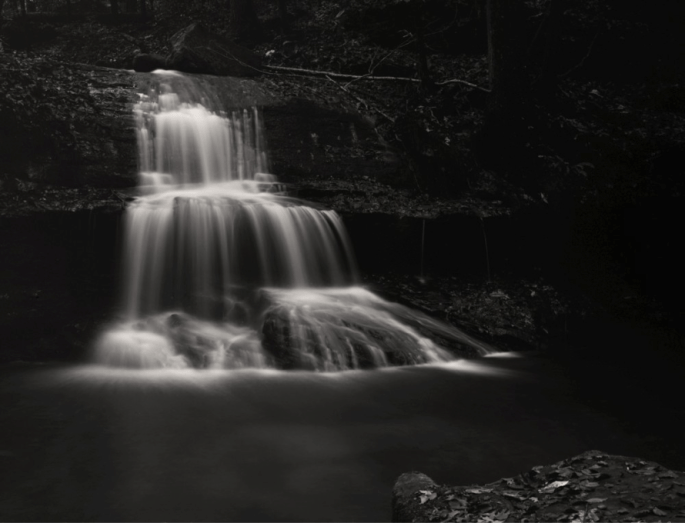
I like images that are both beautiful but also have a story associated with the images. Sometimes the story is about the impact of the image created by the lighting or weather conditions like rain, snow, fog.
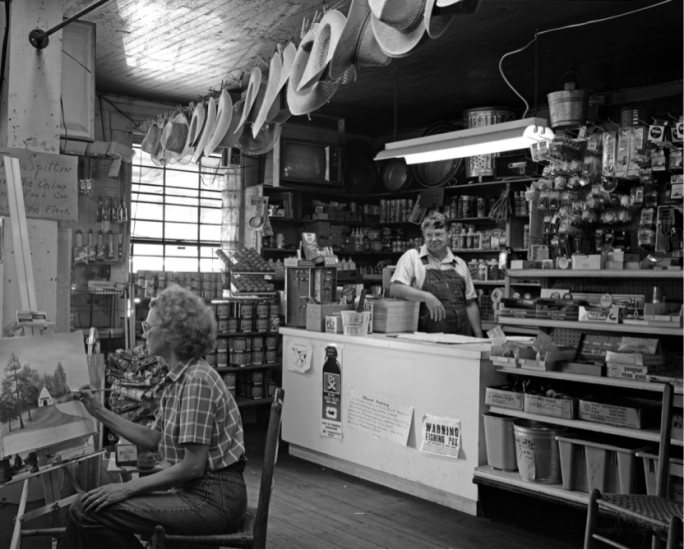
I also love to shoot images of people in settings that have a story behind them, like their place of business, such as; a store, a factory or a craft.
4. What do you think makes your style unique?
I think my view of the world is a bit different and it is reflected in my work compositionally but also in the way I interpret light and compositional elements. I tend to shoot wide in order to tell a story with more content.
5. Do you have any advice for an aspiring photographer?
I suggest having a passion for a subject that is all yours. When people view your work it should not be a repeat of everyone else’s view. Waterfalls and sunsets are wonderful and fun to shoot but they will not make a photographer famous nor will they deliver any suggestion of being unique. You have to create a style both in subject matter and compositional values that viewers can immediately tell it is your work.
6. What is the next big adventure for you, photographically?
I am working on a couple of books and brochures for the travel industry related to promoting the scenic beauty of the Southeast United States.
I am also working toward a B&W book called “Where the Road Ends”. These images are mostly large format B&W images of views of long-term business locations that have been in families for generations or have already closed but the their story still can be told in the images of their slow decay along the roadsides of America.
John Alexander Dersham Classic Fine Art B&W on Facebook
https://www.facebook.com/John-Alexander-Dersham-Classic-Fine-Art-Black-and-White-Photography-313045360458/?fref=ts
Welcome to the third instalment of ‘Profiling Photographers.’ I first met Fiona when judging at St.George Leagues Photographic Club. I hope you find her images and attitude to image-making as inspirational as I do. Thank you, Fiona for contributing to this series.
Gear:
Nikon D600;
Tamron 24-70mm f/2.8; Nikon 70-200mm f/2.8; Tamron 150-600mm f/5-6.3
Tamron 90mm f/2.8 macro; Lensbaby Composer; Samsung Galaxy S5
Why did you choose Photography as your medium of communication?
My father was a very keen photographer, and I guess I followed his example. Ever since I discovered that photography meant I could make and keep images, I have loved it!

Which Photographers have been the greatest influences on you & why?
1. My Dad – because he was the first and foremost photographer in my life. Subsequently, his sister (my aunt) was a great influence.
2. So many photographers at the St George Leagues Club Photographic Society, because that is where I rediscovered my photographic self 7 years ago.
3. Current influences are Sue Robertson, Rob Smith, Karen Scrimes, Des Crawley, John Swainston, Alister Benn, Darren Jew . . . etc, etc, too numerous to mention!
4. Then, there are the classics of course – Cartier-Bresson etc. Again, too numerous to mention.
What inspires you to create the type of images that you do?
The extraordinary power of nature is my primary inspiration. I am constantly drawn to natural phenomena and their inherent beauty. After winning the biology prize at school back in Scotland in the 1980’s, I was introduced to the films of David Attenborough. Since that time, my biggest dream has been to make wildlife films that document the extraordinary wonders of this amazing world we live in.
Maybe one day . . .
What do you think makes your style unique?
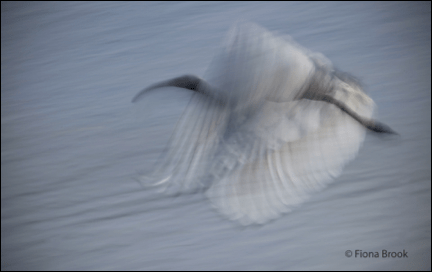
It took me ages to find my “style”, but I think in recent times I have found an impressionistic style that says what I want to say with my wildlife photography (especially birds).
Do you have any advice for an aspiring photographer?
I still think of myself as an aspiring photographer, so it’s difficult for me to give advice in that regard. If I were to give general advice about life, it would be – DON’T BE AFRAID! Fear is a disabling emotion 🙂
What is the next big adventure for you, photographically?
I have no idea – that’s what makes it a big adventure!
To view more of Fiona’s images, please click on the following link
Welcome to the second instalment of ‘Profiling Photographers.’ I have known Kenneth Hall for many years via a few different projects/associations. Kenneth, through his background and interests, has a unique view of Australia which he imparts to those who view his photography and of course, his customers in his growing ‘Australian Photography Tours’ business. Thank you to Kenneth for agreeing to be part of this series.
Gear: Primary Canon 5D plus range of L series lenses
1. Why did you choose Photography as your medium of communication?
I have spent all my life outdoors starting as a child on the Yorkshire Moors with my father followed by many years travelling the world as a professional soldier and finally immigration to Australia.
I was also a dedicated solo bushwalker later developing and operating bushwalking clubs as well as being a member of six additional clubs.
I love nature so it was a natural step to take for me into photography.
Australia is a good place to be as a photographer and living in Macarthur gives me access to many areas of NSW.
The colours of Australia are superb, particularly dawn, sunrise and sunset. Much of my photography is undertaken at these times.
What better way to communicate with people than using colour?
Most people are visual and to use that old saying “a picture says a thousand words.”

2. Which Photographers have been the greatest influences on you & why?
Ansel Adams, his landscapes are superb and created with the minimum of equipment.
Several from National Geographic – they are engaged in many projects around the world. One example is Paul Nicklen. They have the reputation, money and backing of an internationally known organisation. I associate their photographers with high-quality photographs with very daring and difficult to obtain compositions
Alfred Stieglitz – for his contribution to photography. It is wonderful to be known for what one did and remembered with affection.
“Adams credits three people for driving his interest in photography, Wesson and Strand and Stieglitz but it is Stieglitz that he regarded as the most important. He also regarded that first solo show in New York as the most important of his career.”
Steve McCurry – in particular for his “Afghan Girl”. Pay him a visit, his gallery says it all “http://stevemccurry.com/galleries”
3. What inspires you to create the type of images that you do?
Australia and NSW. I never become bored with nature, it is a passion.
Photography, when used in tours leads onto other things. My clients have many questions about Australia, its people, nature and our First People.
I have led a great life, none so good as my now nearing 40 years in Australia.
At one time whilst working on a four-year project on Longwall mining I was privileged to spend one day every week with a tribal elder. It was the most incredible education.
This led onto research as far back as Gondwana and the super-continent Pangea.
Our business reflects this in the choice of Gwondana, the birth of Australia as it broke away from Pangea.
I am a very proud Australian by choice.
Besides being heavily involved in landscape photography and in my book that covers everything but weddings, portraits and modelling I still do commercial photography for my clients.
This came about because of the high prices charged by professional photographers when I was optimising clients websites.
4. What do you think makes your style unique?
I don’t know that I have a unique style. If I have then I hope it is for a celebration of Australia.

5. Do you have any advice for an aspiring photographer?
Get out of bed early.
Seek advice, find a mentor, learn patience and practice.
Photography is all about people, not equipment.
6. What is the next big adventure for you, photographically?
I have already started on a heritage buildings project.
In 2016, I will be visiting the UK, Canada and Alaska.
We have now taken on board the NSW Central West in the Goldfields and hooked up with Viator and a large Australia wide real estate organisation.
More of Kenneth Hall’s images can be viewed at:
Australian Photography Tours – Gwondana Photography Pty Ltd
http://www.australian-photography-tours.com
http://www.australian-sightseeing-tours.com.au
https://plus.google.com/+Australianphotographytours698/posts
https://www.facebook.com/pages/Australian-Photography-Tours/319705881489289
https://www.facebook.com/naroomaphotographytours
http://34-kenneth-hall.artistwebsites.com/
Duane Michal’s Art has, throughout his photographic life been met with controversy as he has a non-conformist view of photography.
“The Joy Of Photography Volume 2” indicates that his chief inspiration was Surrealism. The Surrealistic Painters, he said, ‘always contradict people’s assumptions, whilst photographers never do.’
Duane Michals often attempted to ‘play with people’s minds’ in his Art rather than ‘record’ a scene, whether it be shooting standalone images or shooting a series of images on a theme.
He said the magic was ‘seeing people in different ways.’
He preferred Environmental Portraiture and worked in Black & White with existing light and compared his photography with the writing of fiction. He often placed a familiar subject (or object) in unfamiliar territory or in an unfamiliar way or context.
One of my favourite photographic quotes is attributed to him….
“Trust that little voice in your head that says, ‘wouldn’t it be interesting if….’ and then do it.” – Duane Michals.
I first came across the above quote in 1982 (when my own serious photographic journey began).
Duane Michals inspires me in ‘how I think about photography.’ As I am shooting that quote springs to mind every time and I encourage every photographer to do the same.
I’ve included the following link so that you can view some of his images.
http://duanemichals.tumblr.com
A long, long time ago (when Photography was first invented) Painters were worried that this new Art would kill them off. Why would anyone need to paint when you could just take a photo?
Of course this proved to be a fallacy. The Art of Painting grew.
Fast-forward to the 21st Century, where Digital technology has seen the most wondrous advances in photo production (the Megapixel race continues), where image manipulation software turns photos into Watercolour, Oil, Sketches and thousands of other effects are possible in a myriad of combinations.
Is there a threat to the Art of Painting now?
No.
Just like in Photography, Painting requires technical skill however (all things being equal) our individual imagination, ideas and expressive ability are what set us all apart.
In Photography it has never been easier to obtain a ‘technically competent image’ with all the technological advances that have been made. Technology however has not yet been able to replace our imagination. Photographers continue to express their ideas in new and interesting ways, based on their individuality, their environment and the influences present in their lives.
In Painting, whilst there are different grade brushes, paint and canvas options, there are no ’36 Megapixel brushes’ to give the Artist a technically-competent painting. The Painter must continue to endeavour to master the techniques and then introduce their imagination and ideas and be able to express them.
As a Photographer of 33 years and (at this point) a casual Painter of 3 years, the challenge is ahead to endeavour to master the technical aspects of painting so that I may then use my imagination to express my ideas to their fullest.
It is a challenge I am really looking forward to!
Written by David Johnson
6 September 2015
Urban sketches, etchings, watercolours, pen and ink.
A Daily Visual Journal
Practical advice for a happier, fuller, and more meaningful life
INSPIRATIONAL KWOTES, STORIES, and IMAGES
Malaysian author and storyteller
Welcome to my mind. Watch the first step, it's a doozy.
A learner for life….wants to live fully….destination matter so does the journey…every movement to feel alive…and die with peace in eyes…being me…
A look at life, achieving good physical and mental health and happiness
embrace the magic
Just another WordPress.com site
A place where words come alive
Learn more about an independent artist who creates a unique style of music all his own.
Discovering the joy of art
Writing, Poetry, book reviews, interviews, music reviews, contests, art
Mostly photographs with some words by this arty scientist...
Artist by choice, photographer by default, poet and author by accident.
"Rêve onirique & Bulle d'évasion"
Life is all about being curious, asking questions, and discovering your passion. And it can be fun!
By JMACTHEDREAM
Adevărata graniţă a libertăţii este gândirea. - Juliana Mallart
Listen to your inner self..it has all the answers..
For the love of pens, paper, office supplies and a beautiful place to work
Pens, inks, notebooks and other accessories
Adventures in Watercolor Painting and Sketching, Watercolour Magazine, with Charlie O'Shields
Poetry From the Heart!
News, Tips & Website Tutorials
Become the oil and wine in today's society.
I want to be rich. Rich in love, rich in health, rich in laughter, rich in adventure and rich in knowledge. You?
If you want to be a hero well just follow me
I dream so I write ..
Musings on poetry, language, perception, numbers, food, and anything else that slips through the cracks.
Jane Lurie Photography
An Independent Nondiscriminatory Platform With No Religious, Political, Financial, or Social Affiliations - FOUNDED 2014
Random Ravings from an Old Bloke Down Under
By Periwinkleblur
Author, Blogger, Social Media Jedi
Where observation and imagination meet nature in poetry.
Original poetry, commentary, and fiction. All copyrights reserved.

